

Sustainability · 2025
In this section51 topics
- Sustainability Policy3 items
- Sustainability Goals & UN SDGs3 items
- Policy Review3 items
- Business Value Chain1 item
- Stakeholder Analysis2 items
- Environmental Policy & Guidelines4 items
- Environmental Policy Review3 items
- Energy — Plan & Guidelines2 items
- Energy — Electricity Consumption1 item
- Energy — Fuel Consumption1 item
- Energy — Targets2 items
- Energy — Performance & Outcomes2 items
- Water — Plan & Guidelines2 items
- Water — Withdrawal, Discharge & Consumption1 item
- Water — Targets2 items
- Water — Performance & Outcomes2 items
- Waste — Plan & Guidelines2 items
- Waste — Generation, Disposal & Recycling1 item
- Waste — Targets2 items
- Waste — Performance & Outcomes2 items
- GHG — Plan & Guidelines2 items
- GHG — Emissions1 item
- GHG — Emissions Verification2 items
- GHG — Principles & Standards1 item
- GHG — Targets1 item
- GHG Targets — Net Zero1 item
- GHG — Performance & Outcomes2 items
- Environmental Legal Incidents1 item
- Other Environmental Management1 item
- Social Policy & Guidelines4 items
- Social Policy Review1 item
- Social — Principles & Standards Practised1 item
- Human Rights Due Diligence2 items
- Employees — Plan & Guidelines3 items
- Employees — Workforce1 item
- Employees — Remuneration & Provident Fund1 item
- Employees — Training & Development1 item
- Employees — Occupational Health & Safety1 item
- Employees — Labour Relations1 item
- Employees — Employee Representation2 items
- Employees — Targets2 items
- Employees — Performance & Outcomes2 items
- Customers — Plan & Guidelines3 items
- Customers — Satisfaction Results1 item
- Customers — Targets2 items
- Customers — Performance & Outcomes2 items
- Community & Social — Plan & Guidelines3 items
- Community & Social — Targets2 items
- Community & Social — Performance & Outcomes2 items
- Law Violation Incidents1 item
- Law Violations — Case Detail & Corrective Measures1 item
Sustainability Policy
Has a Sustainability Policy
Yes
Policy Description
Sustainable Banking
With the tenet of 'banking with purpose' and the accountability of a Domestic Systemically Important Bank (D-SIB), Krungsri strives to operate in accordance with good corporate governance based on the sustainable banking guidelines by incorporating ESG dimensions in the Bank’s processes that go hand in hand with prudent and rigorous ESG risk management. At the same time, we explore opportunities ideal for operating as a responsible financial service provider, taking into account the positive social and environmental impact, which is consistent with the responsible lending guidelines in the best interests of all groups of stakeholders, while also enhancing our capabilities to address the Sustainable Development Goals (SDGs) both at the national and international levels.
Sustainability Vision
Krungsri has established its sustainability vision 'to be the most sustainable commercial bank in Thailand' by integrating Environmental, Social, and Governance (ESG) dimensions into its business operations, comprising:
Environmental Aspect
Environmental Management and Resource Efficiency
Climate Change Management
Social Aspect
Customer Experience and Market Conduct
Responsible Lending and ESG Consideration
Human Resources Development
Fair Labor Practices and Respect for Human Rights
Financial Inclusion
Health, Safety, and Working Environment
Stakeholder Engagement
Promotion of Financial Literacy
Community Participation and Social Engagement
Economic and Governance Aspect
Data Governance and Personal Data
Financial Crime Prevention
Cybersecurity and AI Governance
Good Governance and Anti-Corruption
Risk and Crisis Management
Innovation and Digital Transformation
Supply Chain Management
UN Principles for Responsible Banking (UN PRB)
Krungsri leveraged its operations by joining the United Nations Environment Programme Finance Initiative (UNEP FI) and becoming an official signatory to the UN Principles for Responsible Banking in 2022, major steps toward following sustainable banking guidelines.
The Principles for Responsible Banking (PRB) are the global framework developed in partnership between banks worldwide and UNEP FI. Krungsri’s signing of the PRB reflects our determination to conduct business following the sustainable banking guidelines, enabling the Bank to establish strategies and practices in line with the vision society has set out to achieve global targets, namely the UN SDGs and the Paris Agreement which, in turn, will help Krungsri’s competitive edge in developing social, environmental, and sustainable finance facilities. Furthermore, adoption of the PRB elevates the operating standards of Thai financial institutions to the international level for greater stability.
Principles for Responsible Banking (PRB) consist of six principles as follows:
Alignment: Alignment of business strategies with the Sustainable Development Goals (SDGs), the Paris Agreement, and other relevant national and regional frameworks
Impact & Target Setting: Setting and publishing the Bank’s targets that increase positive impact and significantly reduce negative impact
Clients & Customers: Working responsibly with clients to encourage sustainable practices and enable economic activities
Stakeholders: Proactive engagement and partnership with stakeholders to achieve society’s goals
Governance & Culture: Governance and promotion of an organizational culture that aligns with the Principles
Transparency & Accountability: Review and disclosure of implementation of the Principles
ESG Declaration
Krungsri reaffirmed our commitment to sustainable banking by collectively launching the ESG Declaration with 14 member banks under the Thai Bankers’ Association to drive change in financial institution business operations with transparency and flexibility. The ESG Declaration sets the banking industry’s clear common direction under a 'comply or explain' principle by proactively addressing key ESG issues, e.g. climate change, diversity and human rights, financial inclusion, and reduced inequalities, while also advocating sustainability awareness among stakeholders and supporting Thailand’s smooth transition to achieving the UN SDGs and the Paris Agreement.
ESG Declaration consists of six shared action priorities as follows:
Governance: Ensure good corporate governance and effective oversight at the board level, with clear accountability and responsibility at the management level regarding the ESG agenda
Strategy: Integrate ESG into business strategies and define frameworks for sustainable finance
ESG Risk Management: Incorporate ESG issues, including climate change, into risk management processes
Financial Products: Utilize digital technology to increase financial accessibility; help customers achieve Net Zero emissions and sustainable growth
Communication: Communicate and collaborate with all stakeholders in raising public awareness of ESG issues
Disclosure: Develop monitoring and reporting systems in line with Thailand’s regulatory frameworks and global sustainability disclosure standards
Internalizing Environmental and Climate Change Aspects into Financial Institution Business for Banks
Krungsri and other Thai commercial banks under the Thai Bankers’ Association jointly developed Thailand’s 'Industry Handbook: Internalizing Environmental and Climate Change Aspects into Financial Institution Business for Banks' in 2023, stipulating environmental and climate change management guidelines in conformity with the Bank of Thailand’s 'Directional Paper on Transitioning towards Environmental Sustainability under the New Thai Financial Landscape' and 'Policy Statement: Internalizing Environmental and Climate Change Aspects into Financial Institution Business'. The Industry Handbook reflects the commercial banks’ determination to emphasize environmental and climate change management as an urgent national and international agenda, as well as a core mission of the banking sector as financial intermediaries that help drive the real sector’s shift to a low-carbon, eco-friendly society.
The Industry Handbook aims to assist commercial banks, including foreign commercial banks’ branches or subsidiaries in Thailand, to embody environmental and climate change matters in business operations, and appropriately adopt the key actions stipulated in the Industry Handbook according to the expectations of regulators.
Not only does the Industry Handbook help financial institutions improve their systems, processes, data, and employee capabilities appropriate to the organization's context, but it can also be used to develop financial products and services that aid the sustainable transition of the business sector to achieve targets as stipulated in the aforesaid ESG Declaration.
Policy Document Link
https://www.krungsri.com/en/esg/sustainable-banking/toward-sustainable-banking
Sustainability Goals & UN SDGs
Has Sustainability Goals
Yes
Goals Description
Krungsri has set sustainability targets aimed at achieving Net Zero as follows:
Decarbonizing the Bank’s own operations to achieve a Net Zero target by 2030
Decarbonizing the Bank’s financial services to achieve a Net Zero target by 2050
Phasing out our exposure to coal-fired power plants by 2030, enhancing the financial disclosure policies with an action plan to disclose our financed emissions, as well as reduction targets
Increasing Social and Sustainable Finance (SSF) portfolio by growing our SSF portfolio target from the previous 100,000 million baht to 250,000 million baht by 2030 (from the baseline year 2021)
Contributing to the active promotion of sustainable and green finance market development in Thailand
UN Sustainable Development Goals
| SDG Goal |
|---|
| Goal 1 No Poverty |
| Goal 3 Good Health and Well-being |
| Goal 4 Quality Education |
| Goal 5 Gender Equality |
| Goal 6 Clean Water and Sanitation |
| Goal 7 Affordable and Clean Energy |
| Goal 8 Decent Work and Economic Growth |
| Goal 9 Industry, Innovation and Infrastructure |
| Goal 10 Reduce Inequalities |
| Goal 11 Sustainable Cities and Communities |
| Goal 12 Responsible Consumption and Production |
| Goal 13 Climate Action |
| Goal 14 Life below Water |
| Goal 15 Life on Land |
| Goal 16 Peace, Justice and Strong Institutions |
| Goal 17 Partnerships for the Goals |
Policy Review
Policy Reviewed This Year
Yes
Policy Changed This Year
Yes
Review Details
Krungsri’s Social and Sustainable Finance (SSF) Portfolio
In 2025, Krungsri conducted a further review of its Social and Sustainable Finance (SSF) targets. This follows the previous revision in 2024, which saw the target for social and sustainable financing increased from 100,000 million baht to 250,000 million baht.
New Target: As of early 2026, Krungsri announced an increase in the financing target for social and sustainable business projects from the previous 250,000 million baht to 350,000 million baht by 2030 (using 2021 as the base year).
Business Value Chain
Value Chain Description
Value Chain refers to the structural framework illustrating the Bank’s operational processes designed to create value for customers, optimize operational costs, and enhance competitive advantages to ensure business sustainability. This encompasses an end-to-end integration from upstream (suppliers) to downstream (end-consumers) through two core components: Primary Activities, which directly deliver financial products and services, and Support Activities, which support and enhance the effectiveness and efficiency of primary operations.
Primary Activities: business operations are conducted with consideration and linkage to socio-economic and environmental impacts, including;
Funding sources
Financial access
Operations
Financial product development appropriate for target groups, with consideration of ESG dimensions
Credit underwriting based on ESG dimensions
Digital transformation to cut waste and emissions
Business continuity
Marketing and sales
Market conduct
Accurate and complete disclosure of financial product data
Fair competition
Advertising and public relations that promote brand image
Access to financial innovations and products
Convenient, fast, and secure financial services
Inclusive and extensive centers/ offices/ branches
Financial inclusion and equity
Financial transactions
Cybersecurity and AI governance
Personal data security
Financial crime prevention
After-sales services
Customer relationship management
Complaint case management
Communication channels appropriate for target groups
Support Activities include
Risk management
Procurement management
Human resources management
Digital innovation and technology management
Other infrastructures, e.g., accounting and finance systems, business administration, legal tasks, and compliance tasks
Stakeholder Analysis
Introduction
Krungsri places high fairness-based value on all stakeholder groups, internal and external. The Bank ensures that a stakeholder analysis and prioritization process is in place, with concern for diverse relevant factors, e.g. relationships with stakeholders; the connection with adding value throughout the entire supply chain; shareholders’ different levels of expectations, interests, and influence on the Bank’s operations in terms of economic, social, environmental, and governance aspects; mutual dependency; codes of conduct, and responsibility toward stakeholders. Krungsri categorizes stakeholders into nine groups as follows.
1) executives and staff;
2) shareholders;
3) customers;
4) suppliers or vendors;
5) creditors;
6) regulators of the banking business and listed companies;
7) investors and analysts;
8) other commercial banks or financial institutions;
9) communities and society
In addition, Krungsri has established processes that build meaningful stakeholder engagement by focusing on their expectations and perspectives on the Bank’s operations. Considering this, we can establish stakeholder engagement guidelines and best practices appropriately and efficiently, covering the ESG dimensions with issues that could affect the Bank’s business capabilities. Furthermore, engagement results between Krungsri and stakeholders are reported to the Board of Directors or subcommittees such as the Sustainability Committee or senior management overseeing engagement with each stakeholder group, e.g. the Bank’s annual general meeting of shareholders, analyst briefings, meetings with credit rating agencies which rate Krungsri and our subsidiaries, and activities supporting ESG business customers. Greater stakeholder engagement will not only enable us to make strategic business decisions so that we will be able to respond to expectations across all stakeholder groups in all aspects, but also mitigate potential risks and adverse impacts to build better stakeholder relationships that promote sustainable success.
.
.
.
.
.
.
.
.
.
.
.
.
.
.
.
.
.
.
.
.
.
.
.
.
.
.
.
.
Stakeholder Analysis
| Stakeholder Type | Stakeholders | Stakeholder Expectations | Response to Expectations | Communication Activities |
|---|---|---|---|---|
| Internal stakeholders | 2921 · Description: Employees · 2936 · Other name: Executives · Description: Others | • Clear business direction and goals, including targets or performance indicators within the economic, social, environmental and governance dimensions
• Codes of conduct and employee fair treatment
• Appropriate compensation, welfare, and benefits
• Respect for labor and human rights
• Occupational health, safety, and work environment care
• Job security and advancement
• Supporting and enhancing employee skills, knowledge and competencies
• Promoting organizational commitment, unity, and value to the organization
• Work-life balance
• Listening to employees’ voices | • Annual staff training and career path planning
• Creating individual development plans and executive potential development programs
• Evaluating performance in both financial and non-financial areas
• Overseeing workplace well-being, safety, and environment such as setting up Krungsri Clinic and Krungsri Happy Heart Center
• Providing appropriate health care and life insurance for executives and staff members
• Fair labor practices and respect for human rights
• Engagement activities between executives and staff members
• Establishing Krungsri Club
• Allocation of annual budget for CSR activities
• Listening to employee complaints via the Bank’s complaint channels, e.g., HR Service, whistleblowing channels, etc. | 2940 · Description: Social Event · 2941 · Description: Online Communication · 2942 · Description: Internal Meeting · 2943 · Description: External Meeting · 2945 · Description: Complaint Reception · 2946 · Description: Employee Engagement Survey · 2947 · Description: Satisfaction Survey · 2948 · Description: Training / Seminar · 2949 · Other name: Activities to promote organizational culture and core values, including regular meetings with representatives of Bank of Ayudhya’s labor union · Description: Others |
| External stakeholders | 2913 · Description: Shareholders | • Qualifications and professionalism of the Board of Directors and executives, and the proportion of independent directors
• Good returns and sustainable growth
• Disclosure of operating results in an accurate, complete, transparent, and verifiable manner
• Preventing breaches of shareholders’ personal data and rights
• Taking into consideration environmental, social, and governance dimensions, especially the climate change aspect
| • Respecting the rights of all shareholders equally
• Handling shareholders’ personal data with utmost security
• Organizing annual general meetings and/or extraordinary shareholders' meetings
• Regularly communicating important information to shareholders through the website krungsri.com
• Good corporate governance and codes of conduct
• Anti-fraud and corruption policy
• Prudent risk management
• Business continuity management
• Delivering good performance and reasonable returns
• Social and Sustainable Finance (SSF) for sustainable growth
• Developing digital innovation and operating systems
• Disclosure of operating results in an accurate, complete, transparent, and verifiable manner through multiple channels in an appropriate manner
• Provision of whistleblowing channels
| 2938 · Description: Visit · 2941 · Description: Online Communication · 2944 · Description: Annual General Meeting (AGM) · 2945 · Description: Complaint Reception · 2947 · Description: Satisfaction Survey · 2949 · Other name: Dissemination of the Form 56-1 One Report and the Sustainability Report; Information dissemination for shareholders through the website krungsri.com such as general shareholders' meeting, shareholder press release, shareholder meeting report; Information disclosure through the SET Portal Straight Through system of the Stock Exchange of Thailand · Description: Others |
| External stakeholders | 2923 · Description: Customers | • Having financial products and services that are appropriate and meet customer needs, including financial products and services that promote positive social and environmental results
• Provision of professional and timely service
• Provision of information related to financial products and services in a correct and complete manner
• Access to financial products and services
• Provision of advice and promotion of financial literacy
• Prevention of personal data and right breaches of customers
• Assistance measures for customers who suffered economic impacts | • Fair treatment of customers
• Maintaining customers’ personal data protection with utmost care
• Maintaining cybersecurity
• Financial crime prevention
• Provision of accurate and complete product and service information per best market-conduct practices
• Accountability to customers in terms of products and services
• Provision of impressive customer experiences through product and service innovations, taking into account economic, social and environmental dimensions
• Encouraging corporate customers to be aware of sustainable operations, taking into account the environment, social and governance (ESG) dimensions, such as Krungsri ESG Awards, Krungsri ESG Academy, and Krungsri-MUFG Business Forum
• Adopting digital innovation and technology that help increase customer access to products and services, such as krungsri app, Kept by Krungsri, Krungsri Online, and Krungsri Biz Online, QR Code payment via 'Krungsri Mung-Mee Shop', and the website krungsri.com, etc.
• Providing advice to customers impacted by the economic situations and providing advice on debt restructuring
• Introduced measures to help customers affected by the economic conditions, such as measures to help customers affected by the earthquake and flood, and the 'You Fight, We Help' program
• Supporting customers’ businesses, such as international trade advisory services
• Providing customer convenience for financial access through banking agents
• Providing financial literacy through the online channel of 'Krungsri The Coach'
• Provision of whistleblowing channels, a customer complaint resolution process (CCRP) and 'Krungsri Call Center', Tel. 1572
| 2938 · Description: Visit · 2940 · Description: Social Event · 2941 · Description: Online Communication · 2945 · Description: Complaint Reception · 2947 · Description: Satisfaction Survey · 2948 · Description: Training / Seminar · 2949 · Other name: Communication about assistance measures for customers impacted by the economic crisis and/or disasters and/or emerging infectious diseases via the Bank’s branches, website, and social media channels. In addition, the Bank communicates information on sustainability operations, including trends and significant changes in ESG, such as activities to share knowledge on ESG to corporate customers. · Description: Others |
| External stakeholders | 2899 · Description: Suppliers | • Fair and equitable treatment of suppliers or vendors
• Accurate and adequate information, and equal access to information
• Fair supplier selection
• Transparent and fair procurement processes, with clearly defined, appropriate, and fair payment time frames for suppliers.
• Protection of personal data and confidentiality of suppliers
• Provision of chances to join hands with the Bank and companies in the Financial Business Group in the future
• Participation and support for sustainable supply chain management
| • Fair and equal treatment for suppliers or vendors without discrimination
• Handling suppliers’ and vendors’ personal data with utmost security
• Fair trade with an explicit supplier selection guideline
• Establishment of a green procurement guideline and promoting suppliers with environmentally-friendly business operations
• Use of electronic bidding systems (Electronic Tool) for transparency
• Making timely payments to suppliers
• Training on ESG and sustainable supply chain management to suppliers
• Provision of accurate and adequate key information and conditions under common standards
• Strictly honoring contracts or conditions agreed with suppliers or vendors
• Keeping information received from suppliers or vendors confidential
• Communication of policies and measures related to anti-bribery and anti-corruption, the No Gift Policy, good corporate governance principles, the Supplier Code of Conduct, green procurement practices, the Personal Data Protection announcement, and human rights policies via email at least once a year.
• Provision of whistleblowing channels
| 2938 · Description: Visit · 2941 · Description: Online Communication · 2943 · Description: External Meeting · 2945 · Description: Complaint Reception · 2947 · Description: Satisfaction Survey · 2948 · Description: Training / Seminar · 2949 · Other name: Communication of the Thai Private Sector Collective Action Against Corruption and promotion of membership of the organization among suppliers · Description: Others |
| External stakeholders | 2894 · Description: Creditor | • Honoring agreed terms and conditions
• Timely debt repayment
• Managing liquidity and expectation of potential emergency incidents which could impact liquidity
• Consistent information disclosure
| • Honoring agreed terms and conditions based on integrity, equality, and fairness
• Timely interest payment and debt repayment
• Refraining from disclosing creditors’ personal data and confidential information
• Provision of accurate and adequate information and organizing activities that promote mutual understanding
• Provision of whistleblowing channels
| 2938 · Description: Visit · 2943 · Description: External Meeting · 2949 · Other name: Holding meetings for presenting key highlights of information, view sharing, and taking advice · Description: Others |
| External stakeholders | 2931 · Description: Government agencies and Regulators | • Good corporate governance and business operations under the 'sustainable banking' principles
• Creating economic and social value
• Codes of conduct, as well as fraud and corruption prevention
• Compliance with laws and regulations related to the banking business and listed companies
• Transparency and disclosure of operating performance
• Potential impacts caused by the Bank’s operations on society and the environment
• Responsible lending and ESG considerations
• Financial crime prevention
• Consideration of ESG risk management, particularly environmental and climate change risk management
| • Good corporate governance and a code of conduct
• Anti-fraud and corruption
• Anti-money laundering and countering terrorism financing
• Financial crime prevention
• Establishing sustainable lending guidelines by considering ESG dimensions
• Prudent risk management, especially environmental risk management and climate change
• Business continuity management
• Compliance with laws and regulations related to the banking business
• Cooperation and support in creating economic, social, and environmental value, as well as compliance with the sustainable banking policy
• Provision of officials whose main duty is to cooperate with regulators supervising commercial banks and listed companies
| 2943 · Description: External Meeting · 2948 · Description: Training / Seminar · 2949 · Other name: Regular meetings and cooperation with, and reporting to regulators; Meetings in important occasions for view sharing and taking advice; Transparent performance disclosure via the Bank’s channels · Description: Others |
| External stakeholders | 2904 · Description: Investors or investment institutions · 2905 · Description: Analysts | • Qualifications and professionalism of the Board of Directors and executives, and the proportion of independent directors
• Compliance with principles of good corporate governance and transparency
• Business operations that take into account economic, social, and environmental dimensions
• Efficiently managing opportunities and risks
• Disclosure of operating results useful for investors’ decision-making
• Operating results and business growth
| • Establishment of an investor relations unit responsible for information disclosure and contacting investors and securities analysts
• Ensuring good corporate governance and codes of conduct
• Ensuring anti-fraud and corruption
• Ensuring prudent risk management
• Ensuring business continuity management
• Delivering good performance and reasonable returns
• Developing digital innovations and operating systems
• Disclosure of Krungsri’s financial and non-financial information accurately, adequately, transparently, regularly, and timely through diverse channels and media
• Provision of whistleblowing channels | 2938 · Description: Visit · 2939 · Description: Press Release · 2941 · Description: Online Communication · 2943 · Description: External Meeting · 2947 · Description: Satisfaction Survey · 2949 · Other name: Reporting quarterly operating and financial results through the Stock Exchange of Thailand and the website krungsri.com · Description: Others |
| External stakeholders | 2925 · Description: Financial institution · 2936 · Other name: Commercial banks · Description: Others | • Fair competition
• Banking and economic development
• Cooperation and building networks for sustainable development, in particular, cooperation in supporting the country in managing the environment and climate change to achieve the country's Net Zero target by 2050.
| • Compliance with banking codes of conduct
• Fair competition with a level playing field and business transparency under stipulated regulatory requirements
• Provision of marketing information that would not impact competitors
• Participation in activities beneficial for the financial and banking industry to prevent negative impacts on the banking system
• Participation in and cooperation with member banks under the Thai Bankers' Association (TBA) in matters on which the government agencies seek cooperation, such as measures to assist customers affected by economic conditions or the impact of disasters, assistance measures during disasters, the government’s activities, preparation for cyberthreats, etc.
• Provision of whistleblowing channels
| 2940 · Description: Social Event · 2942 · Description: Internal Meeting · 2943 · Description: External Meeting · 2948 · Description: Training / Seminar · 2949 · Other name: Communication and joint meetings between member banks under the sub-working groups and/or clubs under the Thai Bankers' Association throughout the year, as well as regular meetings and communication among member banks of the Association of International Banks (AIB) · Description: Others |
| External stakeholders | 2902 · Description: Community · 2928 · Description: Society | • Provision of diverse financial products and services in response to the needs of local communities, particularly low-income earners, the underprivileged, etc.
• Provision of complete and accurate financial products and services
• Development of quality of life and promotion of income generation for communities through various forms of activities
• Potential social and environmental impacts caused by the Bank’s operations
• Resource efficiency and reduction of social and environmental impacts
• Listening to the views and demands of communities and society
| • Development of financial products and services in accordance with community and society needs, and enhancing appropriate channels to access products and services
• Establishment of the 'Sustainability Committee' responsible for setting strategies, directions, policies, and directives related to issues of environmental, social, and governance (ESG) or sustainability for the Bank and companies in the Financial Business Group. The committee meets at least once a quarter.
• Establishment of the Corporate Sustainability Department, under the supervision of the Environmental, Social, and Governance Division, to be responsible for implementing CSR initiatives and social activities within the framework of 'Krungsri's CSR 4 Pillars', which include 1.) Creating Sustainability Value, 2.) Giving Back to the Community, 3.) Preserving the Environment, and 4.) Providing Financial Support.
• Using the organization's expertise to create value for the community and society through financial literacy projects to help strengthen and promote the economy of communities or social enterprises.
• Satisfactory survey conducted among those participating in CSR activities to use the results to improve social activities.
• Listening to the perspectives of the communities and society, and providing whistleblowing channels
• Dissemination of the CSR activities information via Krungsri’s channels, such as the website krungsri.com, as well as provision of the Form 56-1 One Report and the Sustainability Report
| 2940 · Description: Social Event · 2941 · Description: Online Communication · 2943 · Description: External Meeting · 2947 · Description: Satisfaction Survey · 2949 · Other name: Dissemination of the information of CSR activities via Krungsri’s channels, such as the website krungsri.com, as well as provision of the Form 56-1 One Report and the Sustainability Report · Description: Others |
Environmental Policy & Guidelines
Has an Environmental Policy
Yes
Policy Description
Environmental Management and Resource Efficiency
Management Approaches
Formulate the 'Environmental Disclosure Statement' in addressing the following global environmental issues:
Striving to protect the environment and responding to climate change is the responsibility of all human beings.
Aiming to contribute to the realization of a sustainable society by protecting the global environment in alignment with the SDGs
Complying with applicable legislation and international agreements and responding appropriately when our operations result in environmental risks or negative impacts
Striving to reduce the environmental impacts of our operations, as well as actively working toward finding solutions to global environmental issues through our business activities
Establish the 'Policy for Environment, Resource, Occupational Health, and Safety' to promote and support environmental management and resource efficiency. The policy serves as a guideline for determining environmental protection and resource conservation measures in compliance with laws and regulations relating to the environment. Krungsri’s executives and staff at all levels, as well as internal and external related parties, shall cooperate in promoting and complying with the following 11 measures regarding energy consumption, resource efficiency, and environmental conservation.
1) Water consumption
2) Energy consumption
3) Fuel consumption
4) Consumption of paper, printing ink, office supplies and equipment
5) Organization of meetings, exhibitions, and events
6) Waste management
7) Wastewater management
8) Occupational health and safety in the workplace
9) Air quality in the workplace
10) Lighting and noise level in the workplace
11) Green SpaceAppoint the 'Environment Working Group' to support responsible business operations that take into account environmental mandates and ultimate energy efficiency and resource management. It comprises 10 business unit representatives and its performance is directly reported to the Sustainability Committee.
Appoint the 'Energy Management Working Group' which comprises nine business unit representatives in charge of alignment with the Bank’s energy saving and management policy, including providing training and campaigning for appropriate energy conservation and management. Its membership is reviewed on an annual basis.
Commit to environmental conservation, resource and energy efficiency, waste reduction, including mitigation of pollution emissions that would affect the environment, thus cutting the emission of greenhouse gases (GHG) and minimizing the risks of climate change, in order to achieve the SDGs
Devise and support alternative operating methods that employ digital technology and Robotic Process Automation (RPA) systems to save energy and resources, resulting in less environmental impact from our operating or service processes
Communicate and provide information about energy and resource efficiency as well as environmental conservation to raise awareness among employees, communities, customers, government agencies, and related parties
Establish appropriate environmental complaint channels via the Bank’s complaint channels, e.g., the website (krungsri.com/en/esg/contactus), Krungsri Call Center 1572, or directly file complaints to the Working Committee on Environment, etc.
Climate Change Management
Management approaches
Declare 'Krungsri Net Zero Vision' in conformity with the United Nations Sustainable Development Goal 13: Climate Action, low-carbon transitions in alignment with the Paris Agreement and Nationally Determined Contribution (NDCs), and support MUFG’s Carbon Neutrality Declaration, with the following goals:
Decarbonizing the Bank’s own operations to achieve the Net Zero target by 2030
Decarbonizing the Bank’s financial services to achieve the Net Zero target by 2050
- Phasing out our exposure to coal-fired power plants by 2030, enhancing the financial disclosure policies with an action plan to disclose our financed emissions, as well as reduction targets
- Increasing social and sustainable finance portfolio by growing our SSF portfolio target to 250,000 million baht by 2030 (from the baseline year 2021)
- Contributing to the active promotion of sustainable and green finance market development in Thailand
Join forces with other members of the Thai Bankers’ Association (TBA) to launch 'ESG Declaration', serving as a framework and operating guideline for climate-related financial disclosures.
Internalize Environmental and Climate Change Aspects into Financial Institution Business in alignment of the Bank of Thailand’s Standard Practice, as well as the Industry Handbook initiated and developed by member banks of the Thai Bankers’ Association (TBA) in collective efforts to enhance commercial banks’ environmental and climate risk management standards and to support customers’ transitions in a concrete manner.
Adjust investment strategies and loan portfolios in line with the 'Responsible Lending' guidelines, which align with Krungsri’s Policy for Credit Risk Management and Policy for Sustainability Lending. This includes increasing the proportion of green loans across various business sectors, such as clean energy projects and low-carbon industries, while reducing the risk of lending to businesses with high environmental impacts or greenhouse gas emissions, such as coal-fired power plants.
Improve risk management processes by integrating ESG criteria into risk assessments and evaluating the impact of climate change on the Bank’s loan portfolio and investments.
Develop financial products that promote environmental sustainability, such as loans for environmentally friendly businesses, financing for business transformation towards sustainability, issuance of green debentures/bonds, and ESG-related funds.
Adjust organization-wide structures and work processes to support environmental and climate change risk management. Under the supervision of the Executive Committee and the Board of Directors, the Sustainability Committee initiated the 'IECC' (Internalizing Environmental and Climate Change Aspects into Financial Institution Business Program) to conduct analyses, research, and provide recommendations in collaboration with environmental and climate change experts. This includes corporate governance structuring, defining the responsibilities of the Board of Directors and senior executives, strategy formulation, risk management, and setting Krungsri’s environmental indicators and targets in line with international standards. Additionally, it ensures the collection, reporting, and disclosure of information on environmental and climate change risk management and opportunities.
Develop knowledge and provide training for the Board of Directors, executives, and employees on environmental and climate change risk management by establishing learning plans aligned with the roles, duties, and responsibilities of each department.
Develop Transition Plans for environmental and climate risk management, particularly high-emissions businesses in which the Bank has high exposure. Related targets and initiatives are set in alignment with Krungsri’s business strategies in achieving the low-carbon transition and decarbonization of our financial services to achieve the Net Zero target by 2050.
Support the transitions of customers, the business sector, and the economy of the country toward emissions mitigation and environmental sustainability in a concrete manner, through our advisory service in raising awareness, as well as sustainable financial products and services to ensure the sustainability of the environment and cope with climate change
Conduct a Carbon Footprint for Organization (CFO) to assess the amount of greenhouse gas emissions from Krungsri Group's business operations and analyze significant sources of greenhouse gas emissions. This effort is to stipulate the practices to effectively reduce the organization's greenhouse gas emissions, including the preparation of various measures to achieve Krungsri Carbon Neutrality Vision. In this regard, the Bank assessed the carbon footprint for the organization according to the criteria stipulated by the Thailand Greenhouse Gas Management Organization (Public Organization) and the ISO 14064-1 standard. These are international standards and requirements for organizations in measuring and reporting greenhouse gas emissions, with an aim to uplift our certification standard of greenhouse gas emissions to the international level.
Promote workflows and operations that help reduce emissions. Examples include digitalization that reduces the use of resources and environmental footprints, improving energy efficiency, supporting the use of alternative energy sources, using electric vehicles, and managing waste within the organization, etc.
Become a member of various organizations to support greenhouse gas emission mitigation in line with Thailand’s Nationally Determined Contribution (NDC), and the Paris Agreement, under the United Nations Framework Convention on Climate Change (UNFCCC), in conformity with the United Nations Sustainable Development Goal 13: Climate Action. In this connection, Krungsri becomes a member of various networks as follows:
The Alliance for Green Commercial Banks (The Alliance)
Partnership for Carbon Accounting Financials (PCAF)
Thailand Carbon Neutral Network (TCNN)
RE 100
Carbon Markets Club
Thailand Climate Business Network (ThaiCBN)
Policy Document Link
https://www.krungsri.com/en/esg/sustainable-banking/environment/environmental-management-and-resource-rfficiency
Environmental Guidelines
| Guideline |
|---|
| Electricity Management |
| Fuel Management |
| Renewable/Clean Energy Management |
| Water Management |
| Waste Management |
| Greenhouse Gas and Climate Change Management |
| Air Quality Management |
| Noise Pollution Management |
Environmental Policy Review
Policy Reviewed This Year
Yes
Review Details
The Target of Social and Sustainable Finance (SSF) Project
Revised the target for financial support toward Social and Sustainable Finance (SSF) projects, increasing it from 250,000 million baht to 350,000 million baht by 2030 (based on the 2021 baseline), in pursuit of achieving net-zero carbon emissions from all financial services by 2050. The new target is expected to be officially announced in early 2026.
Policies & Guidelines Changed
| Change |
|---|
| Greenhouse Gas and Climate Change Management |
Energy — Plan & Guidelines
Has an Energy Management Plan
Yes
Plan Description
Energy Management
Energy Consumption Measures
Communicate and/or campaign for energy saving
Determine the appropriate energy consumption time, e.g., turning on and off lights, air conditioners, and other electrical appliances based on operational periods
Promote utilization of renewable and environmentally friendly energy
Use energy-saving and environmentally friendly electrical appliances and equipment
Log the monthly energy consumption
Remark: Please see the Sustainability Report 2025 topic, 'Environmental Management and Resource Efficiency' for more details
Energy — Electricity Consumption
Electricity Consumption
| Metric | Current Year | Previous Year | Two Years Ago | Remark |
|---|---|---|---|---|
| Total electricity consumption within the organization (Kilowatt-Hours) | 87,966,332.58 | 83,510,791.62 | 86,082,238.83 | 2023 - 2024: Information of electricity consumption of the Bank, branches countrywide, and subsidiaries located in Thailand 2025: Information of electricity consumption of the Bank, branches countrywide, subsidiaries located in Thailand, and six subsidiaries located in overseas |
| Electricity purchased for consumption from non-renewable energy sources (Kilowatt-Hours) | 87,966,332.58 | 83,510,791.62 | 86,082,238.83 | 2023 - 2024: Information of electricity consumption of the Bank, branches countrywide, and subsidiaries located in Thailand 2025: Information of electricity consumption of the Bank, branches countrywide, subsidiaries located in Thailand, and six subsidiaries located in overseas |
| Electricity purchased or generated for consumption from renewable energy sources (Kilowatt-Hours) |
Energy — Fuel Consumption
Fuel Consumption
| Metric | Current Year | Previous Year | Two Years Ago |
|---|---|---|---|
| Jet fuel (Litres) | |||
| Diesel (Litres) | 467,037.87 | 376,487.34 | 373,134.58 |
| Gasoline (Litres) | 3,037,383.42 | 3,301,224.19 | 3,324,758.05 |
| Fuel oil (Litres) | |||
| Crude oil (Barrels) | |||
| Natural gas (Standard cubic feet) | |||
| LPG (Kilograms) | |||
| Steam (Metric tonnes) | |||
| Coal (Metric tonnes) |
Energy — Targets
Has Set Targets
Yes
Targets
| Target | Base Year | Base Year Value | Target Year | Target Change (%) | Unit |
|---|---|---|---|---|---|
| Reduction of fuel consumption | 2,024 | 3,677,711.53 | 2,025 | 5 | Litres |
| Reduction of electricity purchased for consumption | 2,024 | 83,510,791.62 | 2,025 | 5 | Kilowatt-hour |
Energy — Performance & Outcomes
Has Performance Results
Yes
Performance Description
Increasing Energy Efficiency and Promoting Renewable Energy Usage
Krungsri has continuously conducted feasibility studies and made plans for increasing energy efficiency and reducing electricity consumption of all electrical equipment, as well as promoting renewable energy use in the Head Office building, Krungsri Riverside Office, Krungsri Ploenchit Office, and the branches nationwide. This aims to improve electrical equipment efficiency, reduce electricity consumption, and reduce greenhouse gas emissions, with various activities as follows:
Activities | 2025 Performance |
Chiller plant system replacement and control system installation |
|
Split-type air conditioner replacement |
|
LED light replacement |
|
Solar panel installation |
|
Smart Cloud-based Energy Management System Installation |
|
Water — Plan & Guidelines
Has a Water Management Plan
Yes
Plan Description
Water Management
Water Consumption Measures
Communicate and/or campaign for correct and efficient water consumption
Determine the appropriate water consumption time, e.g., watering plants, cleaning areas in front of the building
Use water-saving and environmentally friendly sanitary wares
Stipulate measures on wastewater reuse, e.g., wastewater treatment according to standard procedures and wastewater reuse for some activities
Log the monthly water consumption
Water Stress Assessment
In 2025, Krungsri conducted a Water Stress Assessment, covering its primary locations, including:
The Head Office, Krungsri Riverside Office, and Krungsri Ploenchit Office located in Bangkok;
Krungsri branches across Bangkok and other provinces;
Six subsidiaries located both in Thailand and abroad.
The assessment utilized the Aqueduct Water Risk Tool, developed by the World Resources Institute (WRI), to analyze and evaluate water-stressed areas based on risk levels. The results are used to develop highly efficient water management plans, such as establishing water reserve systems to ensure availability during droughts or water shortages.
Areas with water stress categorized by the risk level
Risk level | Percentage of operating area (%) |
Low Risk (<10%) | 10 |
Low - Moderate Risk (10-20%) | 2 |
Moderate - High Risk (20-40%) | 10 |
High Risk (40-80%) | 45 |
Extremely High Risk (>80%) | 33 |
Total | 100 |
Water — Withdrawal, Discharge & Consumption
Water Withdrawal, Discharge & Consumption
| Metric | Current Year | Previous Year | Two Years Ago | Remark |
|---|---|---|---|---|
| Total water withdrawal (Cubic meters) | 483,621.05 | 419,165.7 | 397,532.05 | 2023 - 2024: Information of water consumption of the Bank, branches countrywide, and subsidiaries located in Thailand 2025: Information of water consumption of the Bank, branches countrywide, subsidiaries located in Thailand, and six subsidiaries located in overseas |
| Total water withdrawal by third-party water (Cubic meters) | 483,621.05 | 419,165.7 | 397,532.05 | 2023 - 2024: Information of water consumption of the Bank, branches countrywide, and subsidiaries located in Thailand 2025: Information of water consumption of the Bank, branches countrywide, subsidiaries located in Thailand, and six subsidiaries located in overseas |
| Total water withdrawal by surface water (Cubic meters) | ||||
| Total water withdrawal by groundwater (Cubic meters) | ||||
| Total water withdrawal by seawater (Cubic meters) | ||||
| Total water withdrawal by produced water (Cubic meters) | ||||
| Percentage of wastewater treated before discharge (%) | ||||
| Total water discharge (Cubic meters) | 386,896.84 | 335,332.56 | 318,025.64 | |
| Total water discharge to third-party water (Cubic meters) | 386,896.84 | 335,332.56 | 318,025.64 | |
| Total water discharge to surface water (Cubic meters) | ||||
| Total water discharge to groundwater (Cubic meters) | ||||
| Total water discharge to seawater (Cubic meters) | ||||
| Total water consumption (Cubic meters) | 96,724.21 | 83,833.14 | 79,506.41 | |
| Recycled water (Cubic meters) | 8,853.98 | 7,178 | 4,128.92 |
Water — Targets
Has Set Targets
Yes
Targets
| Target | Base Year | Base Year Value | Target Year | Target Change (%) | Unit |
|---|---|---|---|---|---|
| Reduction of water withdrawal | 2,024 | 419,165.7 | 2,025 | 5 | Cubic meters |
Water — Performance & Outcomes
Has Performance Results
Yes
Performance Description
Wastewater Reclamation
Krungsri reuses the treated wastewater for efficient water consumption and mitigation of environmental impact.
Performance
Head Office and Krungsri Riverside Office (KSRO): collected and reused the treated wastewater from the cooling tower system, dripping water from the condensation coil system, as well as the treated wastewater from the Head Office and KSRO buildings to water plants, wash the ground floor parking area, and refill the fountains in front of the building, averaging 338.58 cubic meters per month or 4,062.93 cubic meters per year, resulting in cost savings of approximately 69,552 baht per year.
Krungsri Ploenchit Office: reused water from rainwater tanks as well as the treated wastewater from the cooling tower system and dripping water from the condensation coil system to water plants around the office building, and is recycled back into the cooling tower system, averaging 399.25 cubic meters per month or 4,790.98 cubic meters per year. This results in savings of 6,831.14 baht per year.
Waste — Plan & Guidelines
Has a Waste Management Plan
Yes
Plan Description
Waste Management
Waste Management Measures
Regularly provide knowledge and raise awareness regarding waste management in the organization, e.g., banning styrofoam containers, reducing single-use plastics, promoting the 3Rs (Reduce-Reuse-Recycle) concept, and reducing the use of chemical substances
Arrange waste bins with explicit labels of waste types and campaign for waste sorting as stipulated
Designate sufficient space for the storage of waste pending collection
Promote the reuse of items
Log the monthly amount of waste sorting
Krungsri Zero Waste Project
Krungsri initiated this project in 2018 under the concept of 'Let’s Unite for Zero Waste' to address SDG No. 12: Responsible Consumption and Production, and SDG No. 13: Climate Action through the execution of internal projects and activities aiming to raise employee awareness of environmental problems and encourage waste sorting habits within the organization, starting by promoting optimal resource utilization, reduction of waste from the Bank’s processes and activities, including proper waste sorting to cut down the waste sent to landfills which are a major contributor to GHG and climate change.
The activities under this initiative are as follows:
Discontinue the use of Styrofoam containers in the Bank’s canteens and encourage employees to carry their own reusable straw, cup, bottle, bag, eating utensils, and food container to minimize single-use plastics
'Krungsri Right Place, Right Bin' activity encouraging employees to sort waste properly
'Share Bags to Change the World' activity promoting the donation of reusable cloth or plastic bags still in good condition to reduce the use of new plastic bags
Discourage employees from ordering more food than they can eat, and install food waste decomposers to reduce food waste from the Bank's canteens to landfills
Organize projects and activities in collaboration with the public sector and partnership networks to reduce waste and GHG emissions, e.g. the Green Office project initiated by the Ministry of Natural Resources and Environment, and the project of proper e-waste disposal according to international standards in partnership with Advanced Info Service Public Company Limited and Synnex (Thailand) Public Company Limited
Waste — Generation, Disposal & Recycling
Waste Generation, Disposal & Recycling
| Metric | Current Year | Previous Year | Two Years Ago |
|---|---|---|---|
| Total waste generated (Kilograms) | 467,048.87 | 482,120.82 | 606,620.92 |
| Non-hazardous waste (Kilograms) | 465,390.56 | 480,233.7 | 605,129.37 |
| Non-hazardous waste - Landfilling (Kilograms) | |||
| Non-hazardous waste - Incineration (with energy recovery) (Kilograms) | |||
| Non-hazardous waste - Incineration (without energy recovery) (Kilograms) | |||
| Non-hazardous waste - Other disposal operations (Kilograms) | |||
| Hazardous waste (Kilograms) | 1,658.31 | 1,887.12 | 1,491.55 |
| Hazardous waste - Landfilling (Kilograms) | |||
| Hazardous waste - Incineration (with energy recovery) (Kilograms) | |||
| Hazardous waste - Incineration (without energy recovery) (Kilograms) | |||
| Hazardous waste - Other disposal operations (Kilograms) | |||
| Total reused/recycled waste (Kilograms) | 190,919.7 | 168,989.75 | 365,269.29 |
| Reused/Recycled non-hazardous waste (Kilograms) | 190,718.7 | 168,569.75 | 365,269.29 |
| Reused non-hazardous waste (Kilograms) | |||
| Recycled non-hazardous waste (Kilograms) | 190,718.7 | 168,569.75 | 365,269.29 |
| Reused/Recycled hazardous waste (Kilograms) | 201 | 420 | |
| Reused hazardous waste (Kilograms) | |||
| Recycled hazardous waste (Kilograms) | 201 | 420 |
Waste — Targets
Has Set Targets
Yes
Targets
| Waste Type | Disposal Approach | Target | Base Year | Base Year Value | Target Year | Target Change (%) | Unit |
|---|---|---|---|---|---|---|---|
| Non-hazardous waste and hazardous waste | 2758 · Description: Reuse · 2759 · Description: Recycle | Reduce waste volume | 2,025 | 467,048.67 | 2,025 | 50 | Kilograms |
Waste — Performance & Outcomes
Has Performance Results
Yes
Performance Description
Diverted from Landfills
Krungsri promotes organization-wide participation in efficient resource utilization while raising employee awareness about the importance of waste management. The initiative helps create a sanitary and pleasant workplace environment while reducing environmental impact and greenhouse gas emissions. It also helps reduce waste disposal costs and creates positive long-term environmental outcomes.
Target: Aim to reduce waste sent to landfills by no less than 50 percent of total waste
Performance: In 2025, the Bank generated a total of 467,048.67 kilograms of waste. This comprised various types of waste, including general waste, hazardous waste, infectious waste, electronic waste (e-waste), food waste, Refuse-Derived Fuel (RDF), and recyclable waste. Such waste was appropriately managed and treated through various processes, including reuse, recycling, processing, and conversion for use as industrial fuel. As a result of these efforts, the Bank was able to reduce the amount of waste disposed of in landfills by 231,722.60 kilograms, accounting for 49.61 percent of the total waste generated during the year.
GHG — Plan & Guidelines
Has a GHG Management Plan
Yes
Plan Description
Greenhouse Gas Management
Carbon Footprint for Organization
Krungsri conducted a carbon footprint for the organization evaluation by collecting data on greenhouse gas emissions and absorption from Krungsri's business operations and activities, covering the three following scopes:
Scope 1: Direct GHG emissions from organizational activities and operations calculated from combustions of various types of fuel, leakage of refrigerants, leakage of fire extinguisher solutions, leakage of methane emitted from the septic tank system and wastewater treatment tanks, etc.
Scope 2: Indirect GHG emissions from the generation of purchased energy consumed in the organization. In this regard, it refers to electricity purchased from the Metropolitan Electricity Authority and the Provincial Electricity Authority.
Scope 3: Other Indirect GHG emissions which are calculated from:
Category 1: Purchased Goods and Services (e.g., water usage, paper usage)
Category 2: Capital Goods (e.g., expenses for purchased assets)
Category 3: Fuel- and Energy-Related Activities (e.g., fuel and energy acquisition)
Category 5: Waste Generated in Operations
Category 6: Business Travel
Category 7: Employee Commuting
Category 8: Upstream Leased Assets (e.g., electricity usage from standalone ATMs nationwide)
Category 9: Downstream Transportation and Distribution (e.g., the Bank’s cash transport, courier travel, and document delivery)
Krungsri calculated the amount of greenhouse gas emissions, including Carbon Dioxide (CO2), Methane (CH4), Nitrous Oxide (N2O), Hydrofluorocarbons (HFCs), Perfluorocarbons (PFCs), and Sulfurhexafluoride (SF6), Nitrogen Trifluoride (NF3), using the requirements for calculating and reporting the carbon footprint for the organization. Such calculation method is in line with the criteria of the Thailand Greenhouse Gas Management Organization (Public Organization), 8th edition, 6th revision (July, 2022) (The Greenhouse Gas Protocol, Revised Edition October 2016) based on the Global Warming Potential (GWP) Rate from the assessment report of the Intergovernmental Panel on Climate Change (IPCC), Version No. 5 (AR5). ISO 14064-1: 2018 Carbon Footprint Management Standard for Organizations.
GHG — Emissions
GHG Emissions
| Metric | Current Year | Previous Year | Two Years Ago | Remark |
|---|---|---|---|---|
| Total GHG emissions (Metric tonnes of carbon dioxide equivalent) | 139,130.01 | 126,929.23 | 81,753 | |
| Total greenhouse gas emissions 1 (Metric tonnes of carbon dioxide equivalent) | 8,372 | 9,007 | 8,601 | |
| Total greenhouse gas emissions 2 (Metric tonnes of carbon dioxide equivalent) | 37,386 | 37,748 | 43,032 | In 2025, indirect greenhouse gas emissions (Scope 2: electricity purchased for internal use) were offset by purchasing 12,000 Renewable Energy Certificates (RECs), equivalent to a greenhouse gas emission reduction of 6,000 tCO2e. |
| Total greenhouse gas emissions 3 (Metric tonnes of carbon dioxide equivalent) | 93,372.01 | 80,174.23 | 30,120 |
GHG — Emissions Verification
Emissions Verified by a Third Party
Yes
Verifying Body
3180
GHG — Principles & Standards
Principles & Standards Applied
| Standard |
|---|
| 2671 |
| 2672 |
| 2676 |
| 2677 |
GHG — Targets
Has Set GHG Targets
Yes
GHG Targets — Net Zero
Net Zero Targets
| Emission Scope | TGO Certification | Base Year | Base Year Emissions | Near-term Target Year | Near-term Target Change (%) | Long-term Target Year | Long-term Target Change (%) | Target Year | Target Change (%) | Unit |
|---|---|---|---|---|---|---|---|---|---|---|
| 2715 | Net zero pathway | 2,020 | 63,528 | 2,025 | 21 | 2,030 | 90 | 2,025 | 21 | Metric tonnes of carbon dioxide equivalent |
GHG — Performance & Outcomes
Has Performance Results
Yes
Performance Description
'Krungsri, The Green Office' Project
In 2021, Krungsri joined the Green Office Promotion Program initiated by the Department of Environmental Quality Promotion (currently, the Department of Climate Change and Environment) under the Ministry of Natural Resources and Environment. Building upon this commitment, the Bank launched the 'Krungsri, The Green Office' project, with the objective of transforming the organization into an environmentally friendly workplace. The initiative focuses on encouraging behavioral change and active employee engagement in reducing greenhouse gas emissions. Key efforts include minimizing energy and resource consumption, reducing waste generated from operational processes and banking activities, and promoting environmentally responsible initiatives. These actions collectively aim to progressively reduce greenhouse gas emissions toward Net Zero.
The Green Office Promotion Program evaluates participating organizations based on the following criteria:
1) Policy formulation and Green Office action planning;
2) Communication and raising awareness;
3) Resource and energy use;
4) Waste management;
5) Environment and safety;
6) Green procurement;
7) Continuous improvement of Green Office operations
Performance Highlights:
Through its participation in the program, Krungsri became the first commercial bank in Thailand to receive the Green Office certification at the Gold Level (valid from June 1, 2022, to May 31, 2025). In 2025, the Bank further achieved the Green Office Plus certification, underscoring its sustained commitment to advancing environmentally responsible practices and reflecting its success in managing an eco-friendly organization aligned with the Sustainable Development Goals.
Environmental Legal Incidents
Legal Violation Incidents
| Metric | Current Year | Previous Year | Two Years Ago |
|---|---|---|---|
| Number of cases or incidents of legal violations or negative environmental impact (cases) | 0 | 0 | 0 |
Other Environmental Management
Plan Description
Decarbonizing the Bank’s financial services
Phasing out exposure to coal-fired power plants
Target: To phase out exposure to coal-fired power plants by 2030
Performance: As of December 31, 2025, Krungsri’s outstanding financial exposure to coal-fired power plants was reduced to 1,530 million baht, which is expected to decrease to zero by 2030 as planned.
Employees — Plan & Guidelines
Has an Employee Management Plan
Yes
Plan Description
Employment and Employee Diversity
Management Approaches
Establish the 'Human Resources Committee' (HR Committee) to advise on human resource policies and any significant changes regarding the human resource matters of Krungsri Group, e.g. employee policies, projects, plans, and benefit plans. The committee also reviews and evaluates the strategies, policies, and projects or plans related to the missions and strategies of Krungsri Group to ensure they are competitive with those of industry peers while complying with relevant laws and regulatory requirements.
Stipulate the 'Policy for Human Resource' as a framework and guideline for communicating human resource management and development process, as well as related roles and responsibilities, applicable to Krungsri Group. This policy comprises four elements as follows:
1) Recruitment: Covers consideration in internal and external recruitment based on the basic foundation of fair hiring practices, prevention of conflicts of interest, respect for differences and diversity, and employee engagement
2) Workplace environment: Focuses on promoting and supporting diversity in the workplace at home and abroad for a positive working environment, while preventing unwelcome employee behavior; discrimination and division; conflicts of interest; and any harassment that could lead to disrespect for employee rights
3) Performance and compensation management: Focuses on fairness, transparency, verifiability, and no conflicts of interest with clear, fair, and nondiscriminatory guidelines and procedures for employee compensation and benefits 4) Employee development and career management: Focuses on employee development and performance enhancement for both employees and the Bank in accordance with the Bank’s business targets and strategies, while also responding to customers’ demands and preparing employees for competency enhancement to support a sustainable business growthEstablish the 'Procedure for Recruitment and Hiring' so that the Bank’s recruitment and hiring guidelines and steps are clear and standardized, as well as being in compliance with related regulations and policies. This procedure covers the fair recruitment and hiring of permanent employees, short-term employees, advisors, outsourced staff, and interns, with strict adherence to labor laws and regulatory requirements. Job applicants’ qualifications and relevant attributes are considered without discrimination, while emphasis and value are placed on diversity, e.g. ethnicity, gender, age, religious belief or faith. In addition, the Bank focuses on employee and applicant privacy while taking into account data security and respect for the privacy rights of employees and applicants.
Focus on compliance with international legal requirements and frameworks of each country in which the Bank operates business, such as the Lao PDR, Cambodia, Vietnam, the Philippines, and Indonesia
Formulate a clear 'termination guideline', based on fairness and compliance with labor laws, where “terminated” employees are notified by the Human Resources Group upon or before their payday for that month so that the effective date of termination falls on the payday of the following month. In addition, severance and special severance are paid to such employees in compliance with regulatory requirements as well as the Bank’s hiring rules, regulations, and requirements.
Appropriate Remuneration and Benefits
Management Approaches
Establish the 'Nomination and Remuneration Committee' by the Bank’s Board of Directors. The Committee consists of no less than three independent directors or non-executive directors of the Bank. The Chairman of the Committee shall be the Bank’s independent director. The Committee is responsible for determining the policy for remuneration and benefits that reflect objectives, duties, and responsibilities, as well as the risks associated with the Bank or the companies in the Bank’s Financial Business Group, by adhering to clear and transparent regulations. The remuneration and benefits should be competitive with industry peers. Furthermore, the Committee is required to organise at least one meeting per quarter, as deemed appropriate, to ensure efficient operations, and is obliged to report its performance to the Bank’s Board of Directors.
Establish the 'Incentive Subcommittee' by the Human Resource Committee to revise, supervise, and approve principles, guidelines, plans, and other issues related to incentives or rewards, as well as the payment of incentives or rewards of the Bank and the companies in the Financial Business Group. This aims to ensure accuracy, transparency, and fairness for the best interests of the Bank and the companies in the Financial Business Group, and compliance with related regulations. The Subcommittee is required to organize at least one meeting per year.
Perform a survey and review of the remuneration payment and provision of employees’ benefits on a regular basis to improve criteria or remuneration structures in line with the current labor market trends, as well as to ensure that the Bank’s remuneration and benefits are competitive and corresponding to industry peers. In this connection, differences and diversity, e.g. gender, age, ethnicity, and religion, will not be taken into consideration when determining remuneration, benefits, and promotions of employees.
Establish an 'Employee Benefits Committee' for Krungsri Head Office and Krungsri Ploenchit Office each, of which some members are elected from staff representatives (operational level) to discuss and provide views on employee benefits
Provide appropriate benefits to support employees and their families or reduce their cost of living and ease their financial concerns, which will lead to their well-being and good operating performance. The benefits can be categorized into seven programs as follows: 1) Health and life insurance packages, 2) Financial benefits, 3) Employee loans, 4) Provident funds, 5) Social security fund benefits, 6) Benefits from the Workers’ Compensation Fund, and 7) Funeral Assistance Association of Bank of Ayudhya Public Company Limited
Communicate about employee benefits through the Bank’s employee manuals and online channels such as the 'Around HR' emails, the 'Krungsri Portal SharePoint' Intranet, and the 'KarE' mobile application
Provide flexible working hours by changing working hours in line with each individual employee’s working conditions, tasks, and personal needs, without affecting customer services or the Bank’s operations. The ranges of working hours (including a one-hour break) available for selection are 07.30-16.30 hr., 08.00-17.00 hr., 09.00-18.00 hr., and 9.30-18.30 hr.
Provide other facilities in the office to promote employees’ well-being during work, namely:
Facility for religious activities, such as prayer rooms for Buddhists and Muslims
Facilities for wellness and occupational health, such as:
- Krungsri canteens on the 8th and 9th floors of the Head Office, and 12th floor of Krungsri Ploenchit Office
- Krungsri Fitness Center on the 10th floor of the Head Office with trainers available for giving advice on fitness equipment safety and closely monitoring employees using the equipment, with opening hours from 6.30 - 20.00 hr.
- The Oasis corner on the 8th floor of the Head Office
- Krungsri D-Space on the 9th floor of the Head Office
- A lactation room where working mothers can safely express their breastmilk
- Small gardens and walking or running trails around the Krungsri Riverside Office, the Head Office, etc.
Promotion of Employee Engagement
Management Approaches
Foster employee engagement by appointing the 'VOK Champion Working Group' Comprising representatives from each business group, these leaders drive engagement initiatives tailored to their specific departmental contexts. They play a crucial role in implementing improvement plans and reporting progress to executives, ensuring a systematic monitoring mechanism across the entire organization. Additionally, to enhance their effectiveness, Krungsri provides VOK Champions with diverse learning opportunities, including Action Learning, in-depth training, site visits, and the study of Best Practices from leading organizations. This empowers them to apply knowledge sustainably within their units. Furthermore, the Bank encourages cross-functional knowledge sharing, allowing Champions to learn from other groups’ engagement activities and adapt successful ideas to their own departments.
Develop the 'Pulse Survey' as a tool for regular engagement monitoring. Using a set of questions developed in 2024, business units can customize surveys to fit their specific context. The insights gained are analyzed to formulate the 2025 Employee Engagement Action Plan.
Enhance and elevate employees’ feedback mechanisms through 'Krungsri Pulse', featuring new tools and features on the KarE application. This platform systematically surveys engagement, opinions, work experiences, and corporate culture. It provides employees with a convenient way to offer continuous feedback, serving as a vital database for long-term organizational development. An official survey under the theme 'Your Share is Our Care' is scheduled for 2026.
Continuously foster organizational culture through the 'Culture Troop Working Group' mechanism, comprised of representatives from all departments, to drive the creation of organizational culture and employee engagement throughout the organization continuously and sustainably. This is achieved using a Co-Creation approach, allowing all departments and employee representatives to participate in defining the desired work culture. By involving employees at all levels, the Bank has established the 'Krungsri Cultural Pillars' (3Cs):
1. Care: Understanding, caring for, and valuing colleagues.
2. Communicate: Communicating for collaboration and goal achievement.
3. Coach: Being a good coach for one another within the organization.Strengthen leadership potential by designing programs such as CXO (Coaching for Xponential Organization) and courses supporting the 3Cs culture. These are complemented by Micro Learning and podcasts that provide continuous inspiration and positive energy. Additionally, the Krungsri Coaching Club was established to help supervisors and employees master coaching skills, driving Krungsri toward becoming a sustainable learning organization.
Organize activities at both team and organizational levels to foster a culture of cooperation and happiness. By focusing on a holistic ecosystem, the Bank ensures employees feel secure, safe, and proud, which supports sustainable growth. Key activities include:
Recognition & Tradition: Retirement and long-service award ceremonies, as well as merit-making ceremonies on the Bank's founding anniversary.
Interactive Activities: Departmental engagement activities, 'Pay Day, Play Day' for banking knowledge sharing, and Mentor programs for new hires.
D Market: A bi-monthly flea market at the Head Office (9th floor) featuring affordable quality goods from bank partners, community enterprises, and small entrepreneurs, as well as engaging various foundations such as Operation Smile, CCF for Children and Youth, and others to sell products or receive donations.
Krungsri Shirt for the Earth: Recycling campaign solicits donations of older, unused polo shirts from employees. These shirts are collected and recycled to be used as new materials for production. In 2025, a total of 2,425 polo shirts were donated by employees across Krungsri Group.
80th Krungsri Anniversary Celebration Activities: A special event inviting employees to participate in celebrating the Bank's 80th anniversary. From August 8th to October 31st, 2025, for every purchase of Krungsri’s white polo shirt, the Krungsri Club donated 80 baht from the sale of each shirt to the Krungsri Foundation. At the end of the campaign, a donation of 64,000 baht from the sale of 800 shirts was made to the Krungsri Foundation.
Develop KarE application features in the 'KarE Channel,' offering video content through four main programs: 'Insight Krungsri' (building pride), 'Hello Yellow' (engagement variety), 'The Inspirer' (executive inspiration), and 'KarE for You Podcast'. In 2025, the focus shifted to sharing employee visions and the 'Shaping Krungsri Future Together' policy, emphasizing 'Care' as a driving force toward becoming a Net Zero Organization.
Establish the Krungsri Club to encourage employees from different business units to get to know each other and participate in beneficial activities and hobbies together during their free time to strengthen unity and harmony. They can join clubs of their interests, such as the music club, running club, bike club, football club, firearms shooting club, photo club, volunteer club, table tennis club, badminton club, coaching club, and pet club, among others.
Plan Areas
| Plan Area |
|---|
| Fair employee compensation |
| Employee training and development |
| Promoting employee relations and participation |
| Occupational health and safety in workplace |
Employees — Workforce
Workforce Data
| Metric | Current Year | Previous Year | Two Years Ago | Remark |
|---|---|---|---|---|
| Total number of employees (Persons) | 54,746 | 13,912 | 13,952 | For 2023-2024, the reported number of Krungsri employees represents the total workforce of the Bank only, while the reported number of 2025 represents the total workforce of the Bank and all subsidiaries. |
| Number of male employees (Persons) | 22,471 | 4,384 | 4,375 | |
| Number of female employees (Persons) | 32,275 | 9,528 | 9,577 | |
| Total employment of disabled persons (people) | 139 | 139 | 136 | |
| Total disabled employees (people) | ||||
| Total male disabled employees (people) | ||||
| Total female disabled employees (people) | ||||
| Total disabled workers who are non-employee (people) | ||||
| Contributions to the fund for promoting and improving the quality of life for disabled persons | 0 | 0 | 0 | |
| Total number of male employees in operational level (Persons) | ||||
| Total number of male employees in management level (Persons) | ||||
| Total number of male employees in executive level (Persons) | ||||
| Total number of female employees in operational level (Persons) | ||||
| Total number of female employees in management level (Persons) | ||||
| Total number of female employees in executive level (Persons) |
Employees — Remuneration & Provident Fund
Remuneration & Provident Fund
| Metric | Current Year | Previous Year | Two Years Ago | Remark |
|---|---|---|---|---|
| Total disabled employees (people) | 39,203,622,498.8 | 16,981,388,918.02 | 15,795,066,024.47 | - For 2023–2024, the total employee compensation of the Bank consisting of salary, bonus, economic assistance, and provident fund contribution. - For 2025, the total employee compensation includes that of the Bank and its subsidiaries. |
| Total male employee remuneration (Baht) | ||||
| Total female employee remuneration (Baht) | ||||
| Number of employees eligible to participate in PVD (persons) | 28,584 | 13,912 | 13,952 | |
| Total number of employees joining employee provident fund (Persons) | 25,480 | 13,211 | 13,007 | |
| Percentage of total number of employees joining employee provident fund to total number of employees (%) | 46.54 | 94.96 | 93.23 | |
| Number of PVD members / Total eligible employees (%) | 89.14 | 94.96 | 93.23 | |
| Total amount of provident fund contributed by the Company (Baht) | ||||
| Total amount of provident fund contributed by employee (baht) |
Employees — Training & Development
Training Data
| Metric | Current Year | Previous Year | Two Years Ago |
|---|---|---|---|
| Average employee training hours (Hours / Person / Year) | 48.31 | 54.03 | 57.1 |
| Employee development and training expenses (baht) | 4,485.42 | 8,279.63 | 8,476.05 |
Employees — Occupational Health & Safety
Occupational Health & Safety Data
| Metric | Current Year | Previous Year | Two Years Ago |
|---|---|---|---|
| Total number of lost time injury incidents by employees (Cases) | 0 | 1 | 2 |
Employees — Labour Relations
Labour Relations Data
| Metric | Current Year | Previous Year | Two Years Ago |
|---|---|---|---|
| Total voluntary resignations (Persons) | 853 | 921 | 1,138 |
| Male employees who voluntary resigned (Persons) | 275 | 285 | 328 |
| Female employees who voluntary resigned (Persons) | 578 | 636 | 810 |
| Percentage of employee turnover leaving the Company voluntarily (%) | 1.56 | 6.62 | 8.16 |
| Evaluation result of employee engagement |
Employees — Employee Representation
Employees Are Represented Collectively
Yes
Forms of Representation
| Form |
|---|
| Labor union |
| Welfare committee |
Employees — Targets
Has Set Employee Targets
Yes
Targets
| Indicator | Target Areas | Target Year | Target Year — Description |
|---|---|---|---|
| Average Training Hours | 2984 · Description: Employee training and development | 2,025 | To have an average of no less than 48 training hours per employee per year |
Employees — Performance & Outcomes
Has Performance Results
Yes
Performance Description
Awards Received for Human Resource Management
HR Excellence Awards 2025
|
|
Best Company Awards 2025 from HR Asia in four categories as follows;
|
|
Top50 Companies in Thailand 2025 Awards |
|
Global Best Employer Brand Awards in the category of Excellence in Training and Development 2025 from World HRD Congress |
|
The Sauciest Workplace & Culture Excellence Awards from Techsauce Awards 2025 Event by Techsauce |
|
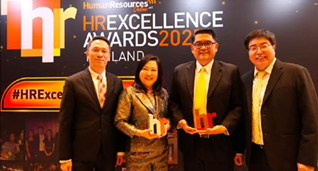
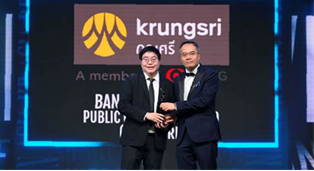
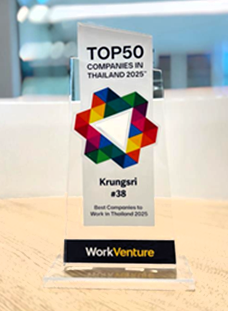


Customers — Plan & Guidelines
Has a Customer Management Plan
Yes
Plan Description
Customer Experience and Market Conduct
Management Approaches
Establish the core value of 'Customer Centricity' as part of the organization’s culture, as well as the heart of our business operations, to become customers’ most preferred financial institution. Customers’ feedback and suggestions are used to tailor our financial products and services to the demands of each customer segment, namely corporate, SME, and retail customers. Customer experience is connected across our online channels for a smooth journey in accessing Krungsri Group’s products and services anywhere, anytime.
Strictly adhere to the market conduct and responsible lending regulations of the Bank of Thailand (BOT) to mitigate the risks of non-compliance with BOT regulations, suspension of services, fines or penalties, and risk of damage to reputation or organizational image
Formulate the 'Policy for Market Conduct and Responsible Lending' for controlling market conduct and responsible lending management according to regulatory requirements, serving as a guideline on providing fair services and responsible lending to customers. The Bank and companies in the Financial Business Group (Krungsri Group) must refer to this policy when formulating their own comparable policies, except group companies located in other countries. If the country’s regulator has market conduct and responsible lending policies or requirements, or any other similar regulation, the group companies located in the said country must adhere to the said regulation. Moreover, the policy must be reviewed at least once per year or upon significant changes.
The framework based on minimum market conduct and responsible lending standards stipulated by regulators, such as the BOT, is as follows:
It is the duty of the Bank’s Board of Directors, relevant committees, and senior management to be responsible for promoting and overseeing market conduct in a concrete and effective way and making it part of the organizational culture.
The Bank’s products must be appropriately developed in accordance with each target customer segment, which includes product development or selection, distribution channels, staff’s sales skills, applications, and control measures.
Remuneration and penalty measures must be established by taking service quality into account, and must be strictly complied with and appropriate for staff at all levels related to customer service administration and provision, including the supervising executives, in order to ensure market conduct.
Sales-related processes must be appropriately established in a way that does not breach customer privacy. The information provided must be complete, not overclaiming, not distorted, and sufficient for decision-making with the correct understanding, so customers can decide what to buy or use. This includes complete and appropriate information provision and after-sales services.
Training and communication must be provided to staff at all levels related to customer service to ensure that they realize the importance of market conduct. The content must be complete, clear up, up to date, and easily applicable. There must be evaluation of training and communication success, including follow-up of employees' development as planned.
Customers’ personal data must be kept confidential with personal data security measures to prevent data loss and unauthorized or wrongful data access, use, change, or disclosure.
The settlement of complaints and indemnities for customers must be performed in a clear, swift, independent, efficient, and fair manner. Relevant actions must be taken to prevent repeating problems. The reporting to the senior management and the executives in the relevant functions must be conducted regularly, while significant matters, overall complaints made, and the progress or timeline of problem-solving must be reported to the Board of Directors so that the related policies and strategic plans can be reviewed. The reports must be prepared in accordance with the formats and guidelines determined by the BOT.
Operations must be controlled, supervised, and audited by taking market conduct and prudence into consideration, with detection of potential risks, irregularities, and conflicts of interest to efficiently prevent loss.
Business operations must be managed under operating systems, risk management, as well as action and contingency plans to ensure continuous and fair customer service.
In addition, there are additional market conduct and responsible lending frameworks stipulated by regulators such as the BOT, as follows:
Loan products must suit customers’ needs and affordability, and must not urge customers to amass too much debt by setting interest rates based on the risk of customers or categories of customers and the nature of the loan, including setting loan conditions that are fair.
Advertisements must be controlled to ensure that the contents are accurate and clear, with complete information that allows the comparison of conditions, interest rates, and fees without stimulating too much debt. This will ensure that customers receive and understand the necessary information sufficient for making decisions, including promoting financial discipline.
The sales process must be established in a way that provides customers with key facts that are complete, not overclaiming, not distorted, and sufficient for decision-making. Also, the products offered to customers must correspond to their objectives or needs for loan usage and not stimulate too much debt.
To assess debt affordability, all the borrower’s debt burden and net income after deducting all payments (residual income) must be considered to be sufficient for borrowers to make a living on a best-efforts basis.
To promote financial discipline and management while in debt, customers must be provided key facts and warnings, including tools to nudge them toward healthier financial behaviors and manage their own debt responsibly.
To help borrowers in persistent debt, the creditor must give key information about the consequences of being in persistent debt and have in place a standardized guideline on helping borrowers properly end their debt journey.
To help borrowers with payment difficulties, immediately offer the debt restructuring approach that corresponds to the borrower’s repayment capacity from when the borrower starts showing signs of payment difficulties to after the loan becomes non-performing, especially before taking legal action, transferring or selling the loan, terminating the contract, or seizing the collateral.
For legal action and transfer or sale of loans to another creditor, inform borrowers of their rights and give important information requested by borrowers under litigation. Borrowers should be given an opportunity to participate in debt mediation. After loans are transferred or sold, the borrowers must be offered proper payment conditions.
Stipulate the 'Procedure for Service Quality Assurance' as the guideline on assessing the performance of the Services Quality Assurance Section, Customer Care Department, regarding the service quality evaluation of staff and officers providing customer service via phone or customer visits to ensure that operations are conducted under the same standards without any breach of relevant laws. Service quality is assessed by checking conversation sound clips or customer satisfaction surveys, the results of which will be analyzed and used for setting strategic plans toward ultimate efficiency. The results are also used to evaluate the performance of the relevant staff or business units.
Establish the process of auditing staff’s sales quality by stipulating the 'Procedure for Sales Quality Checking' (Call Back) to control, supervise, and audit sales operations in compliance with the Policy for Market Conduct and Responsible Lending by randomly calling customers to survey their satisfaction with the staff’s service quality. The survey results will be analyzed and used for the Bank’s service enhancement.
Improve workflows in conformity with changing customer behaviors with the aim of providing correct and speedy services by promoting, communicating, and setting standards so that all functions within Krungsri Group realize and understand the 'Customer Complaint Resolution Process' (CCRP) which covers not only the main contact channel 'Krungsri Call Center 1572', but also other channels such as the Bank’s branches, website (krungsri.com), email, and post address. This includes implementing service technology and innovations through the 'Krungsri Smart Experience' (KSX) system to analyze information and forecast overall customer problems for use as the guideline for handling customers’ complaints, compliments, and suggestions efficiently. All relevant business units must resolve any complaint within the time limit as per the Service Level Agreement (SLA), counting from the day that the complaint was received from each channel, to ensure customer support efficiency in all dimensions.
Manage and expand the scope of customer services via the live chat channel to facilitate and speed up customer services by establishing the 'Digi-Care Contact Center' in addition to the existing customer service channels in order to accommodate customers who contact through the Bank’s social media channels such as the 'Krungsri Simple' page in Facebook and X (Twitter), website (krungsri.com), email, or other online media such as the Pantip webboard (pantip.com) to ensure that customer service and assistance are provided swiftly.
Develop 'Bella Chatbot', the smart assistant that provides information and answers inquiries for customers 24/7 via social media channels such as the 'Krungsri Simple' Facebook page, including adding various digital service channels, e.g. providing services via krungsri app
Disclose reports of product and service quality, as well as statistics of IT disruption that impacted service provision through significant channels, e.g. krungsri app, Internet banking, Automated Teller Machine (ATM), Cash Deposit Machine (CDM), and the Bank’s branches. The reports are posted on Krungsri’s website (krungsri.com) on a quarterly basis.
Establish the annual customer satisfaction survey process by using the 'Net Promoter Score' (NPS) tool, so that the feedback will be used for improving the Bank’s products and services to perfectly satisfy customer expectations and demands.
Establish the 'Customer Experience Management Division' responsible for collecting and analyzing customer feedback and suggestions given via multiple channels, e.g. product and service satisfaction surveys, customer suggestions given to the frontline staff, including feedback from customers and the public via social media channels. In addition, channels for receiving staff feedback are available as they also play a vital role in enhancing customer experience, while meetings to promote internal cooperation are arranged to improve operational and service efficiency and effectiveness. Feedback from both customers and staff is crucial for in-depth analysis and development planning of Krungsri Group products and services. In this regard, the customer feedback analysis and planning information would be proposed to the 'Customer Experience Council' (CXC) of which the chairman is the Bank’s senior executive, so that the council would select suitable solutions for product and service development as well as deliver the best customer experience.
Establish the 'Branch Service Quality Section' under the supervision of the Branch Communication and Service Quality Department. The section’s duties are to control, supervise, and improve the Bank’s branch service quality to ensure that the services of each branch meet customer demand and deliver an excellent customer experience. Consequently, customers get a good impression and prefer our financial products and services, further engaging with the Krungsri brand, which, in turn, promotes the Bank’s good image and reputation in the long term.
Plan Areas
| Plan Area |
|---|
| Responsible production and services for customers |
| Communication of product and service impacts to customers/consumers |
| Development of customer satisfaction and customer relationship |
| Protection of customer personal information |
Customers — Satisfaction Results
Customer Satisfaction Results
| Metric | Current Year | Previous Year | Two Years Ago |
|---|---|---|---|
| Evaluation results of customer satisfaction | 1 | 1 | 1 |
Customers — Targets
Has Set Customer Targets
Yes
Targets
| Indicator | Target Areas | Target Year | Target Year — Description |
|---|---|---|---|
| Customer satisfaction with Krungsri's branches | 3009 · Description: Development of customer satisfaction and customer relationship | 2,025 | Aims for an NPS score of no less than last year's 94. |
Customers — Performance & Outcomes
Has Performance Results
Yes
Performance Description
Key Performance for Customers Responsibilities
Krungsri conducts a customer satisfaction survey on the Bank’s branch services nationwide on a yearly basis, of which feedback will be used for the Bank’s branch service enhancement and improvements, such as branch staff, services, and manners; knowledge enhancement for staff responsible for financial products and services; staff training on related regulatory requirements; improving workflows for greater efficiency, etc. The Bank has established the ‘Branch Service Quality Section’ under the supervision of the Branch Communication and Service Quality Department, responsible for branch service quality control, supervision, and enhancement, to ensure better response to customer demands and excellent customer service. As a result, customers have been impressed by branch services and have chosen to use more of the Bank’s products and services, establishing a connection with the Krungsri brand, which leads to the Bank’s improved reputation over the long term.
For 2025, Krungsri set a target to maintain the customer satisfaction score for its branch services, measured by the Net Promoter Score (NPS), at a level not lower than the previous year. The NPS for this year remained at 94, the same level as the previous year. The Bank is committed to sustaining and continuously enhancing customer satisfaction with branch services.
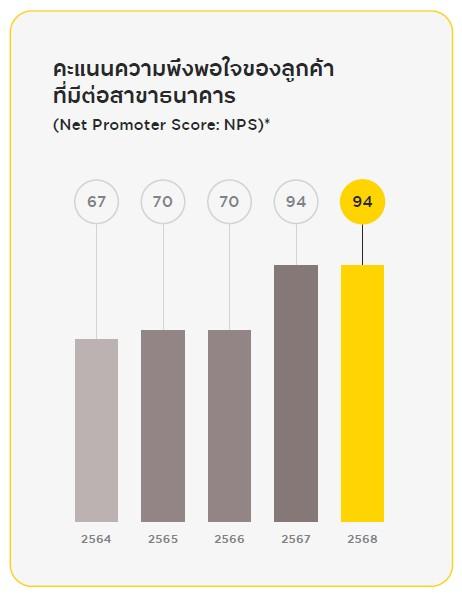
Remark: Please see in the Sustainability Report 2025, topic 'Customer Experience and Market conduct' for more details.
Community & Social — Plan & Guidelines
Has a Community & Social Plan
Yes
Plan Description
Community Participation and Social Engagement
Management Approaches
Appoint the 'Sustainability Committee' responsible for defining strategies, directions, policies, and regulations for operations relating to ESG, sustainability, and social accountability of the Bank and the companies in the Financial Business Group (Krungsri Group) in accordance with sustainable banking principles, the guidelines and expectations of regulators, and the Sustainable Development Goals (SDGs) of the United Nations. The Sustainability Committee shall hold a meeting no less than once per quarter and shall report its performance directly to the Executive Committee.
Formulate the 'Policy for Social Contribution and Project Formulation' as the basic framework for providing financial support and donations to the corporate social responsibility (CSR) activities of Krungsri Group. The group companies must use this policy as a guideline for forming an equivalent policy of their own.
Stipulate the 'Policy and Program for Anti-Bribery and Corruption' to which executives and staff must strictly adhere when considering giving, donating, and supporting various activities that must have legitimate business objectives and do not lead to a conflict of interest, while also being in accordance with the Policy for Social Contribution and Project Formulation. Compliance with the Policy and Program will help prevent and mitigate risks such as bribery, corruption, conflicts of interest, and reputational risks. On top of that, the Policy and Program do not allow the Bank to undertake any political support, whether it is carried out personally or on behalf of the Bank. This is because such undertakings could exert influence on external parties, which may aid the Bank in gaining improper benefits or business advantages.
Establish the 'Corporate Sustainability Department' under the Environmental, Social, and Governance Division of the Corporate Strategy and Planning Group. Its responsibility is to devise CSR strategies and determine plans, projects, or campaigns that have a positive impact on society and the environment, including driving Krungsri’s CSR activities in cooperation with our alliances and relevant parties, both internal and external, to carry out such activities in conformity with international guidelines or standards as well as the UN SDGs.
Instill social and environmental responsibility in the executives and staff of all parts within the organization, including promoting volunteerism in continuously creating value for the community and society under the 'Simple to Share' concept through the execution of CSR projects and activities encompassing the ESG dimensions
Stipulate the social responsibility framework called 'Krungsri’s 4 CSR Pillars' so that our CSR activities respond to sustainable development at the national and international levels. Details are as follows:
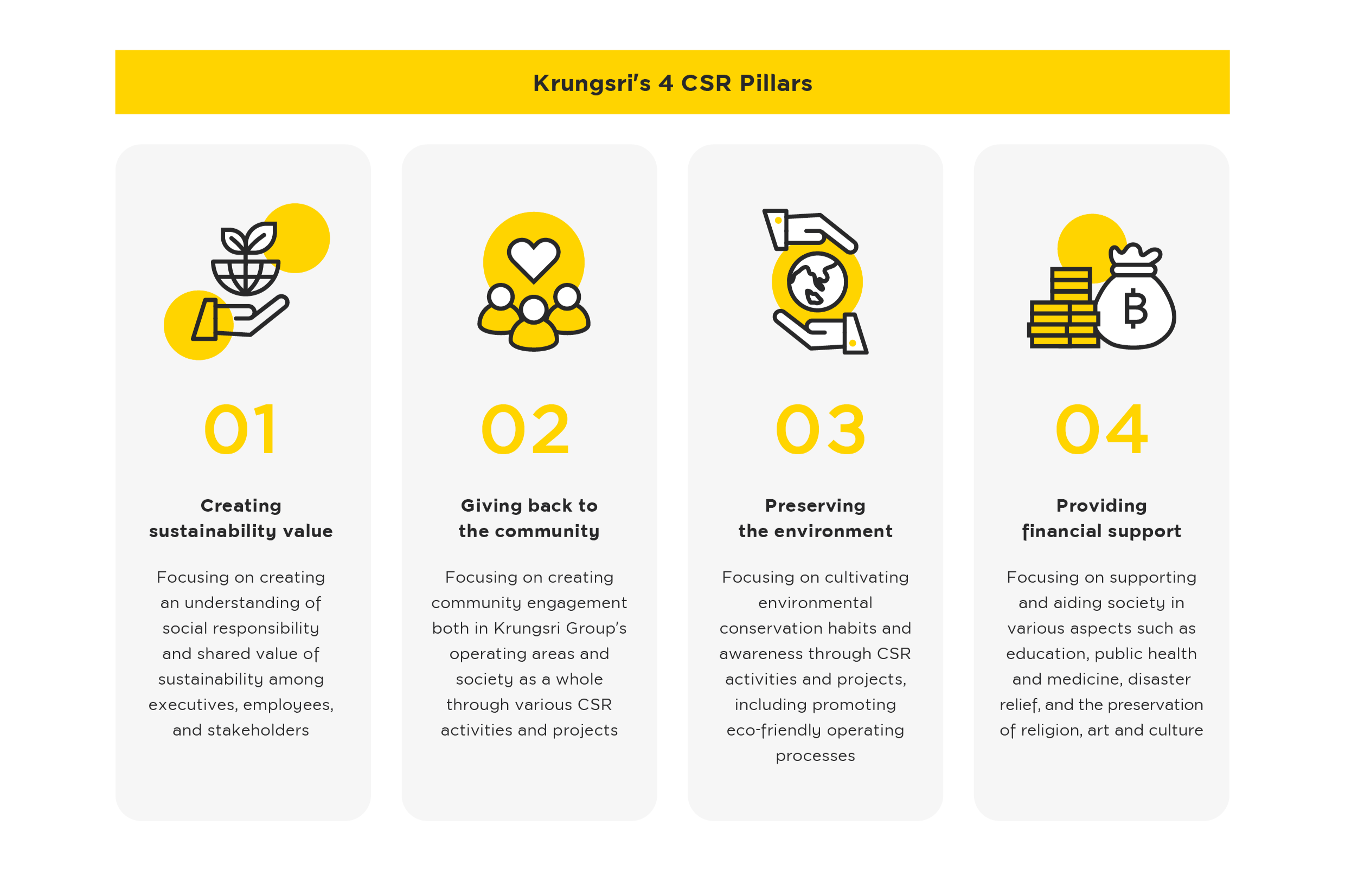
Plan Areas
| Plan Area |
|---|
| Education |
| Religion and culture |
| Forests and natural resources |
| Disadvantaged and vulnerable groups |
| Reducing inequality and promoting social equality |
Community & Social — Targets
Has Set Community & Social Targets
Yes
Targets
| Indicator | Target Areas | Target Year | Target Year — Description |
|---|---|---|---|
| The number of workplace accidents | 3041 · Description: Occupational health, safety, health, and quality of life | 2,025 | The number of workplace accidents warranting days off is zero. |
| Employee participation and volunteer hours | 3045 · Other name: Employee participation in Corporate Social Responsibility (CSR) activities · Description: Others | 2,025 | To have at least 15 percent of total Krungsri Group’s employees (permanent employees) participate in CSR activities as Krungsri Group volunteers |
Community & Social — Performance & Outcomes
Has Performance Results
Yes
Performance Description
Key performance for the responsibility to communities and society
Investment for community and social development * 2.52 million baht | Total donations * 18.91 million baht |
Remark: *Bank of Ayudhya and its subsidiaries only
Krungsri Group's volunteers 3,722 people | Total Volunteer hours 11,525 hours |
Remark: Please see in the Sustainability Report 2025, topic 'Community Participation and Social Engagement' for more details.
“Giving More, Receiving More” Project (Blood Donation Activities)
Krungsri initiated the 'Giving More, Receiving More' project in 2007, in collaboration with the National Blood Centre of the Thai Red Cross Society, to support blood donation activities at its head office, the Krungsri Building (Ploenchit office), and bank branches. This includes activities promoting eye, organ, and body donation to help and save lives, especially in crises when the blood inventory is insufficient for patient treatments. All blood donation events prioritize the appropriateness of the venue and the highest level of safety for participants.
Target: Collaborate with the National Blood Centre, Thai Red Cross Society, to organize the planned blood drives and receive a total of one million cc of blood.
Performance:
A total of 867,150 cc of blood was donated (representing 86.72 percent of the target of 1 million cc).
1,927 people donated blood.
126 people registered as body donors, 128 as organ donors, and 134 as eye donors.
40 Krungsri Group volunteers participated in the activities.
A total of 2,247 volunteer hours (both blood donors and volunteers)

Krungsri Financial Literacy: Simple to Manage Project
The 'Krungsri Financial Literacy: Simple to Manage' project was initiated in 2018 with a focus on providing financial education to university students. Recognizing them as a vital force in driving the country forward, the project aims to promote personal financial management skills, specifically income and expense management. It also encourages students to realize the importance of financial planning and smart risk management before entering the workforce.
Subsequently, in 2024–2025, Krungsri built upon this success by expanding the project to reach farmers. This expansion aims to strengthen personal financial management, marketing, and local product development skills for the agricultural sector, in collaboration with the Social Enterprise Thailand Association (SE Thailand). The activities focus on delivering knowledge through clear, practical examples combined with gamified learning to ensure participants fully understand, engage in discussions, and learn through hands-on experience. The goal is for participants to apply this knowledge to their daily lives, thereby fostering financial discipline and building immunity against informal debt.
Furthermore, this project is part of the framework and budget of the “Enhancing Climate Resilience in Thailand through the Effective Water Management and Sustainable Agriculture” project (E-WMSA), Green Climate Fund (GCF). The primary objective is to support the transformation of water management and agricultural livelihoods in the Yom and Nan River Basins, specifically in the target provinces of Phitsanulok, Sukhothai, and Uttaradit. This initiative is a multi-sectoral collaboration involving the Royal Irrigation Department under the Ministry of Agriculture and Cooperatives, King Mongkut's University of Technology North Bangkok, GIZ Thailand, the United Nations Development Programme (UNDP), Bank of Ayudhya (Krungsri), and the Bank for Agriculture and Agricultural Cooperatives (BAAC).
Target: To provide education on personal financial management, local product development, and marketing to farmers in 24 target subdistricts in Phitsanulok, Sukhothai, and Uttaradit provinces, with completion scheduled for 2026.
Performance: In 2025, the activities were continued from the previous year, enabling the project to achieve its goal of providing financial literacy training to farmers in all 24 target sub-districts.
A total of 472 farmers (133 men and 339 women) from 7 target subdistricts in Phitsanulok Province and 9 subdistricts in Sukhothai Province participated in the activities.
The average satisfaction level with the training program among participants was 96 percent.
20 Krungsri Group volunteers participated, contributing a total of 228 volunteer hours.
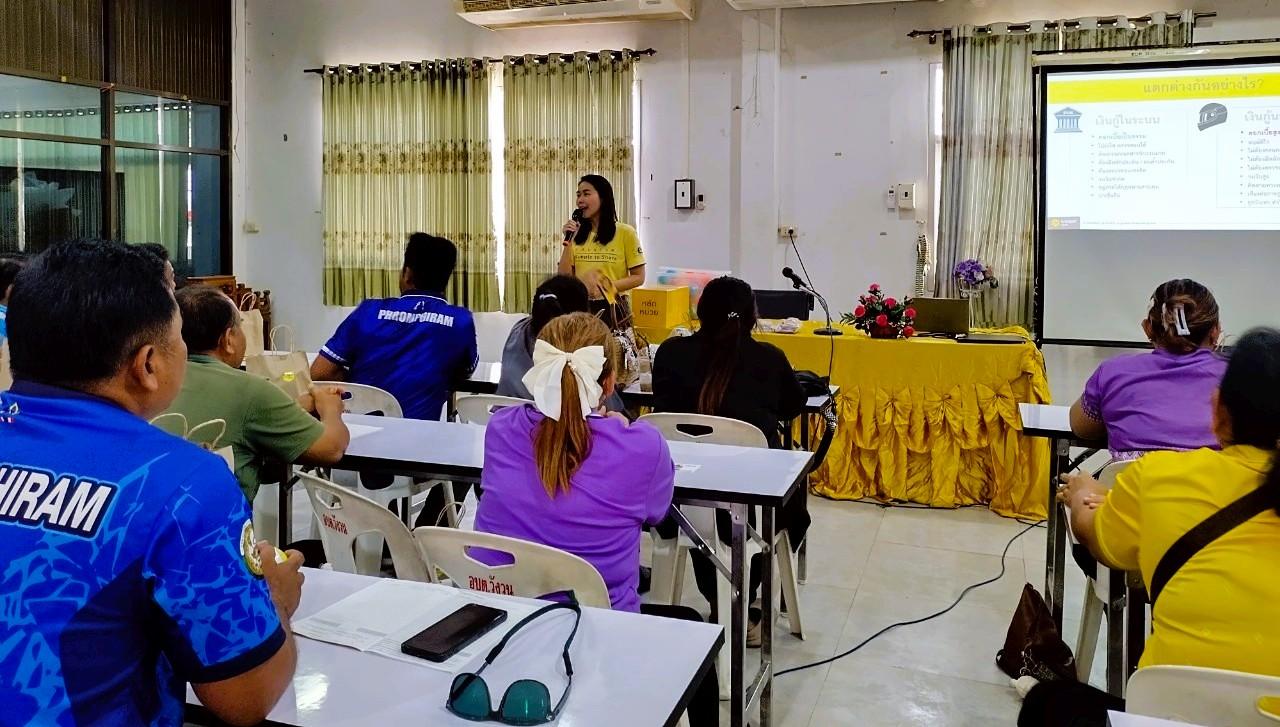
Ayutthaya Historical Site Conservation Project
Krungsri has initiated heritage conservation and development activities at historical sites in Phra Nakhon Si Ayutthaya Province, which has been the Bank’s birthplace since 2015. These activities are carried out in collaboration with the Fine Arts Office 3, Phra Nakhon Si Ayutthaya, Fine Arts Department, with the aim of raising awareness among employees and local communities of the importance of cultural heritage, particularly historical sites within the Phra Nakhon Si Ayutthaya Historical Park, which has been designated as a World Heritage Site. The initiative also encourages active participation in the care and preservation of the nation’s cultural heritage so that it may be sustained for future generations.
Target:
Carry out four historical site conservation activities around Ayutthaya city island and surrounding areas as planned, with a minimum of 70 participants per activity.
The participants’ overall satisfaction score shall be no less than 80 percent.
Performance:
First activity: Held on April 26, 2025, at Wat Chongkram, with 50 Krungsri Group volunteers participating, totaling 400 volunteer hours.
Second activity: Held on July 5, 2025, at Wat Takrai, with 149 Krungsri Group volunteers participating, totaling 1,192 volunteer hours.
Third activity: Held on September 13, 2025, at Wat Maheyong, with 92 Krungsri Japanese executive volunteers participating, totaling 736 volunteer hours.
Fourth activity: Held on September 20, 2025, at Wat Chakrawat, with 100 Krungsri Group volunteers participating, totaling 800 volunteer hours.
The participants’ average overall satisfaction score is 98.91 percent.

Pan Kan: Turn Your Used Items into Scholarships Project
The 'Pan Kan: Turn Your Used Items into Scholarships' project was initiated in 2016 and has been operating continuously for 10 years. Its objective is to cultivate a culture of sharing among Krungsri Group employees while simultaneously creating educational opportunities for youth. This is achieved by collecting donations of pre-owned items in good condition to be delivered to 'Pankan Society Shops by Yuvabadhana Foundation.' The proceeds from the sale of these donated items are then allocated as scholarships for children under the care of the Yuvabadhana Foundation.
Furthermore, this project promotes efficient resource management through the reuse of items, reducing waste and greenhouse gas emissions. This initiative supports environmental sustainability while creating long-term social value.
Target: Set the target to give used items in good condition to Pankan Society Shops by Yuvabadhana Foundation to be sold and allocate the proceeds to no less than 50 scholarships per year
Performance: Throughout 2025, the used items in good condition that Krungsri Group handed over to be sold at Pankan Society shops totalled 511,960 baht of proceeds. The amount can be converted to 73 scholarships (an average of 7,000 baht each). Since the beginning of the project, the total number of scholarships supported by Krungsri is 845 (2016-2025).
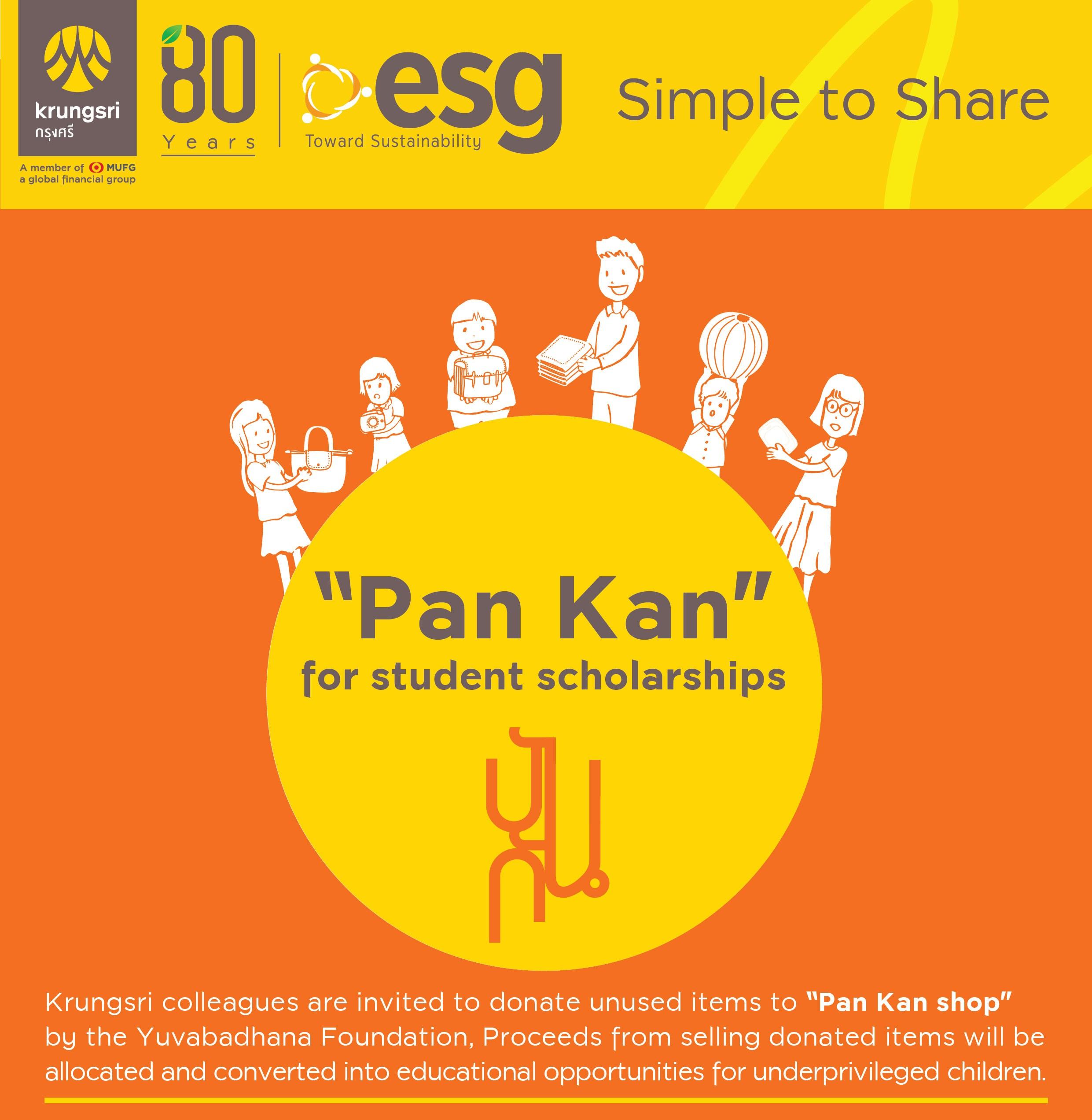
Mangrove Reforestation Activity
Initiated in 2012, the Bank’s mangrove reforestation activity aims to conserve and nurture the healthy mangrove ecosystem and create food sources for marine creatures. The initiative is carried out in collaboration with government agencies and local organizations, such as the Mangrove Forest Resource Development Station 5 (Chonburi), the Chonburi Provincial Mangrove Resources Administration Center, and the Office of Marine and Coastal Resources Administration Region 2 under the Department of Marine and Coastal Resources, among others. Mangrove species planted by Krungsri Group volunteers include Rhizophora (mangrove), Barringtonia asiatica (sea poison tree), Ceriops tagal (orange mangrove), and Avicennia marina (sea mangrove).
The survival rate of mangrove planting is approximately 70–80 percent after planting, depending on factors such as soil conditions in the mangrove area, tidal levels, natural wind patterns, and sea waves. Therefore, mangrove reforestation must be carried out continuously and on a regular basis.
Target:
Carry out activities to plant 1,000 mangroves as planned
The participants’ overall satisfaction score shall be no less than 80 percent.
Performance:
First activity: Held on June 7, 2025, in Ang Sila Subdistrict, Meuang District, Chon Buri, with 52 Krungsri Group volunteers participating, totaling 416 volunteer hours.
Second activity: Held on September 6, 2025, in Ang Sila Subdistrict, Meuang District, Chon Buri, with 27 Krungsri Group volunteers participating, totaling 216 volunteer hours.
1,000 trees were planted.
The participants’ overall satisfaction score was 99.43 percent.
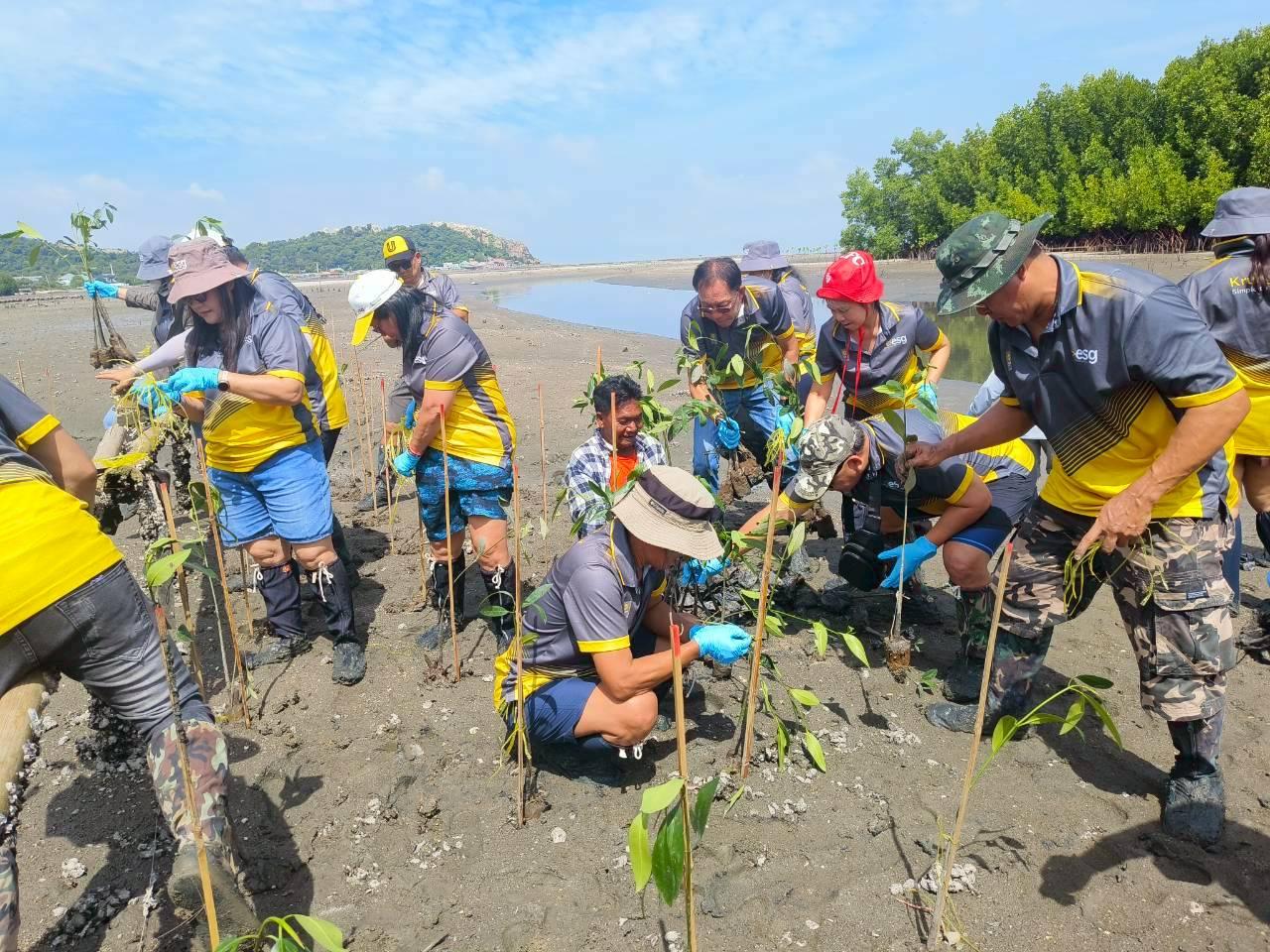
Crab Condo Building Activity
Krungsri recognizes the importance of sustainable environmental and natural resource conservation, particularly coastal ecosystems which are vital to biodiversity and the livelihoods of local coastal communities. Consequently, Krungsri initiated the 'Crab Condo Building Activity' in 2022, in collaboration with government agencies and local organizations, such as the Office of Marine and Coastal Resources 2 (Chonburi) and the Ban Bon Conservation Group (Bang Pakong), Chachoengsao Province.
The objective of the Crab Condo Building Activity is to create habitats for sea crabs and other small marine life, focusing on the use of natural or eco-friendly materials. This helps restore coastal ecosystems and promotes the growth of the sea crab population. Furthermore, the activity cultivates social and environmental responsibility among employees and stakeholders, while fostering tangible shared value with the community for long-term environmental sustainability.
Target:
Conduct crab condo construction activities to conserve mangrove ecosystems according to the established plan.
Achieve a participant satisfaction rating of at least 80 percent.
Performance:
Conducted the Crab Condo Building Activity on August 23, 2025, in Khlong Dan Subdistrict, Bang Pakong District, Chachoengsao Province. A total of 95 Krungsri Group volunteers participated, contributing 760 volunteer hours.
Number of Crab Condos constructed: 7 units.
The participants’ overall satisfaction score was 95.11 percent.

Law Violation Incidents
Law Violation Incidents
| Metric | Current Year | Previous Year | Two Years Ago | Remark |
|---|---|---|---|---|
| The total number of cases or incidents of significant violations of laws or regulations regarding social and human rights (Cases) | 0 | 0 | 1 | In 2025, no employee complaints were recorded regarding human rights violations, breaches of personal rights and freedoms, or discrimination. Furthermore, there were no incidents or legal cases involving violations of social and human rights laws or regulations. Krungsri has established grievance mechanisms that allow employees to report unfair treatment directly, bypassing their supervisors. These channels, such as the HR Service (Tel. 0-2296-2000 ext. 85577) and the Ombudsperson, have been formally communicated and made known to all employees. |
| The total number of cases or incidents that cause significant labor disputes (Cases) | 0 | 0 | 1 | |
| The total number of cases or complaints related to consumer rights violations (Cases) | ||||
| The total number of cases or complaints related to partner rights violations (Cases) | ||||
| The total number of cases or incidents that cause disputes with the community/society (Cases) | ||||
| The total number of cases or incidents related to cyber security or customer data breaches (Cases) | ||||
| The total number of cases or incidents related to safety and occupational health at work (Cases) |
Law Violations — Case Detail & Corrective Measures
Incidents & Corrective Measures
| Year | Incident Detail | Status | Remediation Measures | Non-financial Impact |
|---|---|---|---|---|
| 2,023 | In 2023, the Bank received a complaint from an employee regarding the manager's communication behaviour, including inappropriate language, which led the employee to believe the manager criticised the employee's eating habits and exercise. | Incident no longer subject to action | The matter was examined, and the direct manager was admonished to take a cautious approach when having a conversation with their subordinates. In this regard, Krungsri has established grievance mechanisms that allow employees to report unfair treatment directly, bypassing their supervisors. These channels, such as the HR Service (Tel. 0-2296-2000 ext. 85577) and the Ombudsperson, have been formally communicated and made known to all employees. | - Workplace conflict
- Reduced positive work environment |